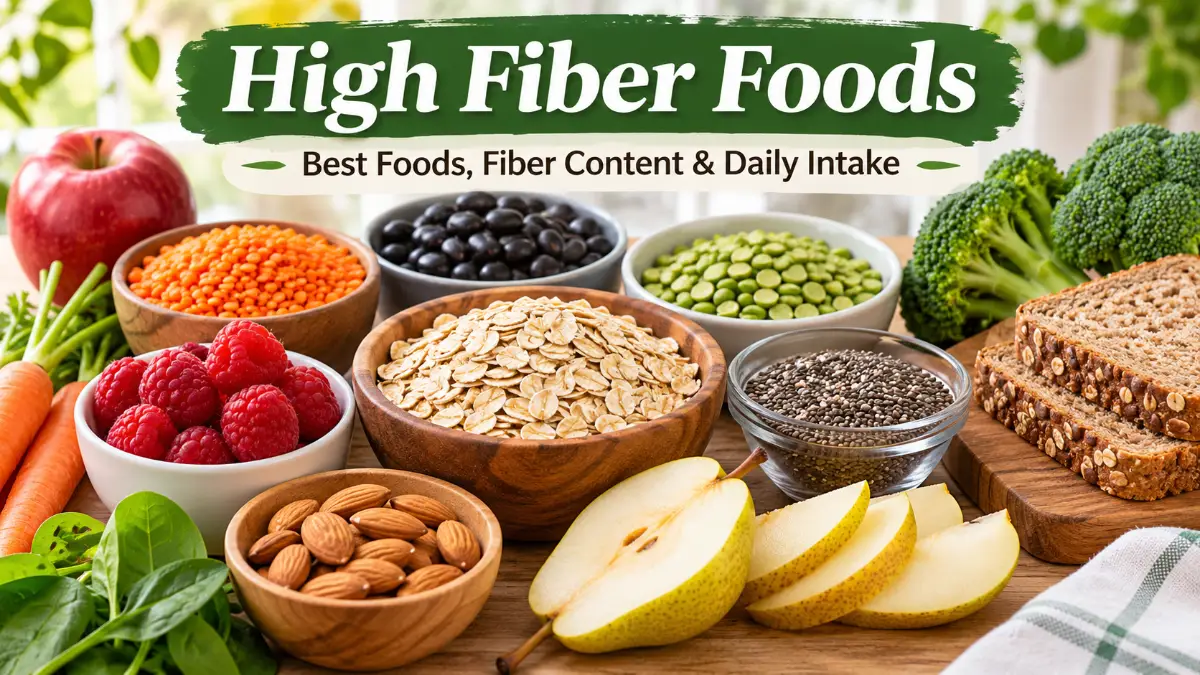
Some of the best high fiber foods include split peas, lentils, black beans, chia seeds, raspberries, and whole grains. One cup of cooked split peas provides about 16 grams of fiber, lentils contain 15.5 grams, and black beans offer 15 grams. Chia seeds provide 10 grams per ounce, while raspberries contain 8 grams per cup. A practical daily fiber benchmark is 28 grams for a 2,000-calorie diet, although individual needs vary by age, sex, and calorie intake.
Dietary fiber is a carbohydrate found in plant foods that your body cannot fully digest. It supports regular bowel movements, helps you feel satisfied after meals, and can benefit heart health. Choosing a variety of fiber-rich fruits, vegetables, beans, grains, nuts, and seeds makes it easier to get enough without relying on supplements.
Best High Fiber Foods List With Fiber Content
The following high fiber foods list includes everyday options organized by food group. Fiber values are approximate and based on Mayo Clinic’s high-fiber food chart, which uses USDA nutrient data.
| Food | Serving Size | Fiber (g) |
| Beans and Legumes | ||
| Split peas, boiled | 1 cup | 16 |
| Lentils, boiled | 1 cup | 15.5 |
| Black beans, boiled | 1 cup | 15 |
| Navy beans, canned | 1 cup | 13 |
| Fruits | ||
| Raspberries | 1 cup | 8 |
| Pear | 1 medium | 5.5 |
| Apple with skin | 1 medium | 4.5 |
| Banana | 1 medium | 3 |
| Orange | 1 medium | 3 |
| Strawberries | 1 cup | 3 |
| Vegetables | ||
| Green peas, boiled | 1 cup | 9 |
| Broccoli, boiled | 1 cup, chopped | 5 |
| Brussels sprouts, boiled | 1 cup | 4.5 |
| Baked potato with skin | 1 medium | 4 |
| Sweet corn, boiled | 1 cup | 4 |
| Grains and Grain Foods | ||
| Whole-wheat spaghetti, cooked | 1 cup | 6 |
| Pearled barley, cooked | 1 cup | 6 |
| Quinoa, cooked | 1 cup | 5 |
| Instant oatmeal, cooked | 1 cup | 4 |
| Brown rice, cooked | 1 cup | 3.5 |
| Whole-wheat bread | 1 slice | 2 |
| Nuts and Seeds | ||
| Chia seeds | 1 oz (28 g) | 10 |
| Almonds | 1 oz (about 23 nuts) | 3.5 |
| Pistachios | 1 oz (about 49 nuts) | 3 |
| Sunflower kernels | ¼ cup | 3 |
Fiber amounts are rounded. Actual values may vary by variety, preparation method, serving size, and brand.
High-Fiber Beans and Legumes
Beans, lentils, and split peas stand out because they provide substantial fiber in an ordinary serving. They’re also useful sources of plant protein, making them a smart addition to meals built around high-protein foods. Lentils and beans also contain iron and other minerals. If you’re planning meals around multiple nutrients, exploring foods rich in iron can help you find more suitable combinations.
High-Fiber Fruits and Vegetables
Raspberries and pears are particularly useful fiber-rich fruits, while green peas and broccoli are excellent vegetable choices. Eating an apple or pear with its edible skin helps preserve its fiber content. Whole fruits generally provide more fiber than filtered fruit juice, making them a better everyday option when increasing your intake.
High-Fiber Grains, Nuts, and Seeds
Whole-wheat pasta, quinoa, brown rice, and oatmeal provide fiber alongside other nutrients. Replacing refined grains with whole-grain alternatives is an easy way to increase fiber without completely changing your meals.
Pearled barley is another fiber-rich option, although it is not technically a whole grain because processing removes some or all of its outer bran layer. Hulled barley retains its bran and qualifies as a whole grain. Chia seeds are especially concentrated in fiber, while almonds and pistachios make convenient snacks. Because nuts and seeds are calorie-dense, portions still matter.
How Much Fiber Do You Need Daily?
Daily fiber requirements depend on age, sex, and energy needs. The established US Adequate Intake recommendations from the National Academies’ Dietary Reference Intakes are:
| Adult Group | Daily Fiber Intake |
| Men, ages 19–50 | 38 g |
| Women, ages 19–50 | 25 g |
| Men, ages 51 and older | 30 g |
| Women, ages 51 and older | 21 g |
Another useful guideline is approximately 14 grams of fiber per 1,000 calories, equivalent to 28 grams for someone eating 2,000 calories daily.
The US Food and Drug Administration also uses 28 grams as the Daily Value for dietary fiber on Nutrition Facts labels for adults and children ages four and older. This labeling figure is not a personalized requirement.
Soluble vs. Insoluble Fiber: What’s the Difference?
Dietary fiber comes in different forms, but the two commonly discussed categories are soluble and insoluble fiber. Soluble fiber dissolves in water and can form a gel-like substance during digestion. Certain soluble fibers help lower LDL (bad) cholesterol and slow carbohydrate absorption. Oats, beans, lentils, apples, and citrus fruits provide soluble fiber.
Insoluble fiber does not dissolve in water. It adds bulk to stool and helps move waste through the digestive system, supporting regular bowel movements. Common sources include wheat bran, whole grains, vegetables, and nuts. According to MedlinePlus, both forms contribute to digestive health. Most fiber-rich plant foods contain a mixture of the two rather than exclusively one type.
Health Benefits of Eating More Fiber
A diet rich in fiber can support several aspects of health, especially when combined with balanced nutrition.
- Better digestive regularity: Fiber helps maintain normal bowel movements and can reduce constipation.
- Heart health: Certain soluble fibers can lower LDL cholesterol, an important cardiovascular risk factor.
- Longer-lasting fullness: Fiber-rich meals often help you feel satisfied, which may support appetite management.
- Blood sugar management: Some fibers slow carbohydrate digestion and sugar absorption.
- Gut health: Certain fermentable fibers provide nourishment for beneficial intestinal bacteria.
These benefits depend partly on the type of fiber and your overall dietary pattern. As Mayo Clinic explains, whole foods are generally preferable to fiber supplements because they also provide vitamins, minerals, and other beneficial nutrients.
Easy Ways to Add More Fiber to Your Diet
Getting more fiber doesn’t require complicated recipes or expensive ingredients. Small changes across breakfast, lunch, dinner, and snacks can make a meaningful difference.
- Breakfast: Try oatmeal topped with raspberries, chia seeds, or sliced almonds.
- Lunch: Add lentils or black beans to salads, soups, or grain bowls.
- Dinner: Replace regular pasta with whole-wheat pasta, or serve vegetables alongside quinoa or brown rice.
- Snacks: Choose whole fruit, air-popped popcorn, or a small handful of nuts instead of low-fiber packaged snacks.
For example, a breakfast containing one cup of cooked instant oatmeal, one cup of raspberries, and half an ounce of almonds provides approximately 14 grams of fiber. That’s nearly half the 28-gram Daily Value.
Increase fiber gradually rather than making a sudden large change. Eating too much too quickly can cause gas, cramps, or bloating. Drink adequate fluids throughout the day because water helps certain fibers function comfortably in the digestive tract.
The MedlinePlus high-fiber food guidance also recommends increasing intake slowly. If you have a digestive condition or have been advised to follow a low-fiber diet, consult your healthcare professional before substantially increasing fiber.
The most practical approach is to combine different fiber-rich foods throughout the day. Beans, vegetables, whole grains, fruits, nuts, and seeds each contribute something different, making variety more useful than depending on any single food.
Frequently Asked Questions
Among common everyday foods, cooked split peas are particularly high in fiber, providing approximately 16 grams per cup. Cooked lentils contain 15.5 grams per cup, while black beans provide around 15 grams. Chia seeds are another concentrated source, offering about 10 grams per ounce.
Raspberries are among the best high-fiber fruits, providing approximately 8 grams per cup. A medium pear contains about 5.5 grams, while an apple with its skin provides around 4.5 grams. Eating whole fruits instead of drinking filtered fruit juice generally helps you get more fiber.
Beans, lentils, pears, oats, vegetables, and whole grains can help support regular bowel movements. Foods containing soluble and insoluble fiber contribute in different ways: some soften stool by retaining water, while others add bulk. Increase fiber gradually and drink adequate fluids to help minimize digestive discomfort.
You can reach approximately 30 grams by combining one cup of cooked oatmeal (4 g), one cup of raspberries (8 g), one cup of cooked lentils (15.5 g), and a medium banana (3 g) across your meals. Together, these foods provide about 30.5 grams of fiber. Other foods you eat throughout the day may add more.
Yes. Increasing fiber intake too quickly can cause gas, bloating, abdominal cramps, and changes in bowel movements, particularly if your digestive system is not accustomed to a high-fiber diet. Increase your intake gradually over several days or weeks, drink enough water, and adjust portions according to your tolerance.


