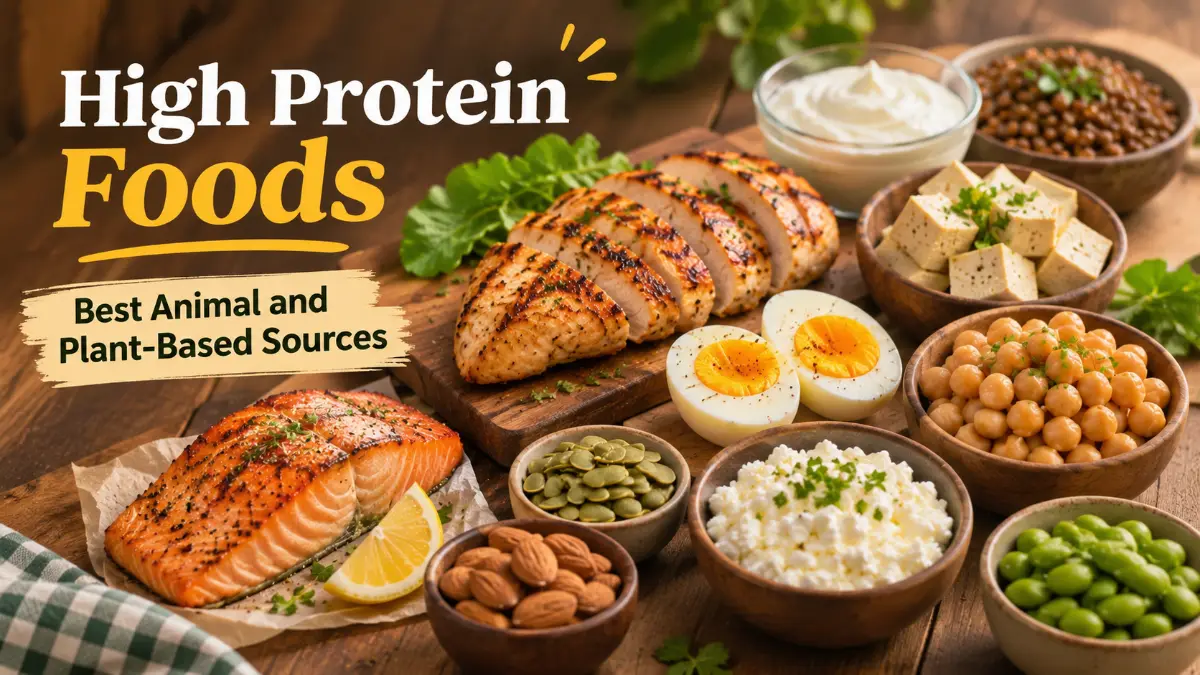
High protein foods include chicken breast, fish, eggs, Greek yogurt, cottage cheese, lentils, tofu, and edamame. For example, a 3-ounce serving of cooked chicken breast provides about 26 grams of protein, two large eggs contain around 13 grams, and one cup of cooked lentils offers approximately 18 grams.
Both animal-based and plant-based foods can help you meet your daily protein needs. The best choices depend on your eating preferences, budget, activity level, and health goals.
The high protein foods list below compares common serving sizes using approximate values from USDA FoodData Central. Actual protein amounts can vary by product, portion, and preparation method.
Best Animal-Based High Protein Foods
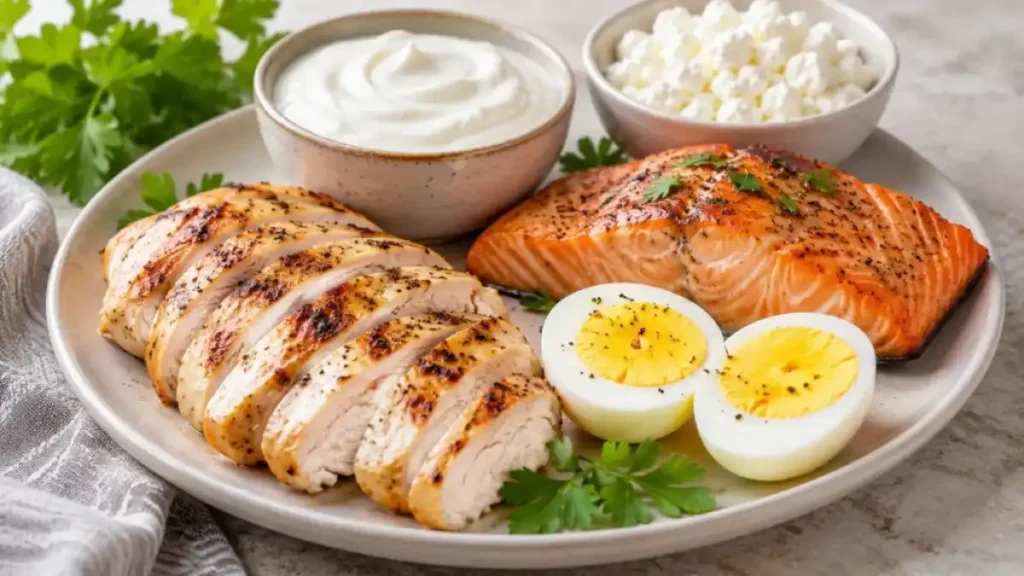
Animal-based foods generally provide complete protein, meaning they contain all nine essential amino acids your body needs. Depending on the food, they also supply important nutrients such as vitamin B12, iron, calcium, and omega-3 fatty acids.
| Food | Serving Size | Protein |
| Chicken breast, roasted | 3 oz (85 g) | 26 g |
| Turkey breast, roasted | 3 oz (85 g) | 26 g |
| Light tuna, canned in water, drained | 3 oz (85 g) | 16-17 g |
| Salmon, cooked | 3 oz (85 g) | 19 g |
| Shrimp, cooked | 3 oz (85 g) | 19-20 g |
| Eggs | 2 large | 13 g |
| Greek yogurt, plain nonfat | 1 cup (245 g) | 25 g |
| Cottage cheese, low-fat | ½ cup (113 g) | 12 g |
| Cheddar cheese | 1 oz (28 g) | 7 g |
Chicken and turkey breast are particularly useful when you want substantial protein without much saturated fat. Salmon provides protein alongside omega-3 fatty acids, while eggs are affordable, versatile, and easy to prepare.
Greek yogurt and cottage cheese are convenient options for breakfast or snacks. Choose plain varieties if you want to limit added sugar, and compare nutrition labels because protein content varies between brands.
Best Plant-Based High Protein Foods
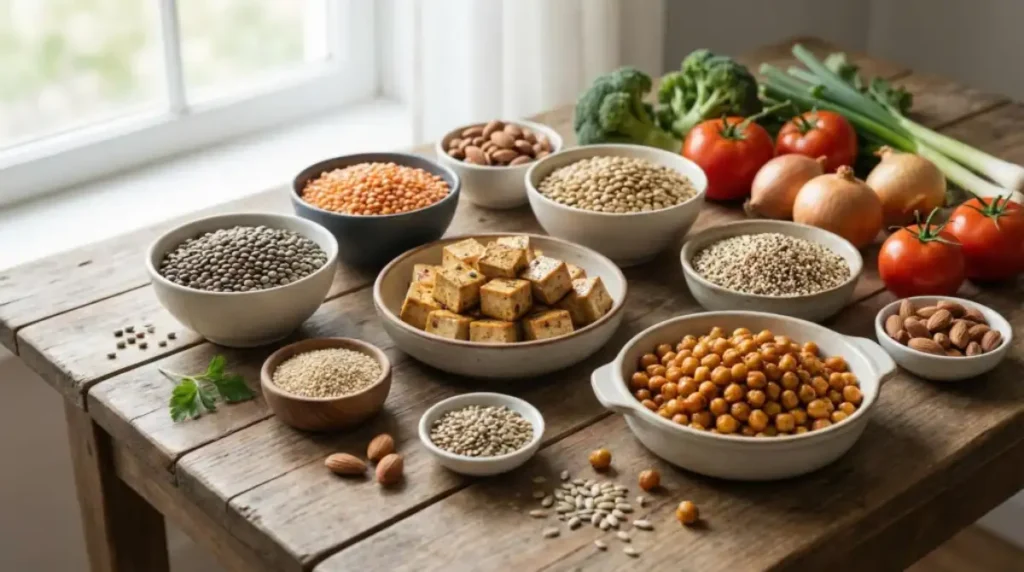
Plant-based protein foods include legumes, soy products, nuts, and seeds. Many also provide fiber, vitamins, and minerals, making them valuable additions to vegetarian, vegan, and mixed diets.
You can meet your protein needs through plant foods by eating sufficient amounts and including a variety of sources. Soy products such as tofu and edamame are especially useful because they provide all nine essential amino acids.
| Food | Serving Size | Protein |
| Firm tofu, calcium sulfate-set | ½ cup (126 g) | 22 g |
| Lentils, cooked | 1 cup (198 g) | 18 g |
| Chickpeas, cooked | 1 cup (164 g) | 14-15 g |
| Edamame, cooked | 1 cup (155 g) | 18 g |
| Black beans, cooked | 1 cup | 15 g |
| Kidney beans, cooked | 1 cup | 15 g |
| Split peas, cooked | 1 cup | 16 g |
| Peanut butter | 2 tbsp (32 g) | 7 g |
| Almonds | 1 oz (28 g) | 6 g |
| Pumpkin seeds, shelled | 1 oz (28 g) | 8-9 g |
Lentils, chickpeas, and beans work well in soups, salads, curries, and grain bowls. Tofu absorbs marinades and seasonings easily, making it suitable for stir-fries, while edamame is a convenient snack.
Tofu’s protein content can differ considerably by firmness and preparation. The 22-gram figure applies to a particular calcium sulfate-set firm tofu, so check the nutrition label when comparing products.
Nuts and seeds provide protein along with healthy fats. However, they are relatively calorie-dense, so portions matter if you are managing your overall calorie intake.
Best High Protein Foods for Weight Loss and Muscle Building
High Protein Foods for Weight Loss
Protein can help you feel satisfied after meals, potentially making it easier to manage hunger and calorie intake. However, eating more protein alone does not guarantee weight loss.
Good options include skinless chicken breast, fish, eggs, plain Greek yogurt, tofu, and lentils. These foods can fit into balanced meals that also contain vegetables, fruit, and fiber-rich whole grains.
For example, grilled chicken with brown rice and vegetables provides protein alongside carbohydrates and fiber. A lentil salad with chopped vegetables makes a nutritious plant-based alternative.
High Protein Foods for Muscle Building
Building muscle requires adequate protein, consistent resistance training, and sufficient overall nutrition. Eating protein-rich foods throughout the day helps support muscle repair and growth following exercise.
According to the International Society of Sports Nutrition’s position stand, approximately 1.4-2.0 grams of protein per kilogram of body weight daily is sufficient for most healthy exercising individuals seeking muscle adaptations.
Chicken, fish, eggs, dairy, tofu, lentils, and beans can all contribute to this intake. Protein supplements are not necessary if you can meet your needs through regular meals.
Affordable High Protein Foods for Everyday Meals
You do not need expensive cuts of meat or specialty products to eat a protein-rich diet. Several everyday foods are nutritious, versatile, and relatively inexpensive.
Eggs, dried lentils, canned beans, canned tuna, plain yogurt, and tofu are practical choices. The USDA’s healthy eating on a budget guide recommends comparing unit prices, planning meals, and buying foods such as dried beans in larger quantities when practical.
Store-brand dairy products, frozen edamame, and canned legumes can also make meal preparation more convenient. Comparing the cost per serving helps you choose affordable protein sources without sacrificing nutritional quality.
Easy Ways to Add More Protein to Your Diet
Including protein-rich foods in everyday meals does not require complicated recipes or strict meal plans.
- Breakfast: Plain Greek yogurt with oats and berries, or scrambled eggs with whole-grain toast.
- Lunch: A chicken and brown rice bowl with vegetables, or chickpea salad served with whole-grain bread.
- Dinner: Baked salmon with potatoes and broccoli, or tofu stir-fry with rice and mixed vegetables.
- Snacks: Cottage cheese with fruit, boiled eggs, roasted chickpeas, or steamed edamame.
Choosing a protein source for each main meal can help distribute your daily intake. Combining different foods also provides a broader range of nutrients.
How Much Protein Do You Need Daily?
The Recommended Dietary Allowance (RDA) for generally healthy adults is 0.8 grams of protein per kilogram of body weight per day. This represents a baseline recommendation rather than an ideal target for everyone.
For example, someone weighing 154 pounds (70 kg) would have a baseline daily requirement of approximately 56 grams of protein.
People who exercise regularly, especially those doing strength training, may need more. The National Institutes of Health’s sports nutrition guidance discusses how physical activity can increase protein requirements.
Age, pregnancy, body weight, activity level, and medical conditions also influence individual needs. Anyone with kidney disease or another condition requiring dietary restrictions should seek personalized guidance from a qualified healthcare professional.
Frequently Asked Questions
Chicken breast, turkey breast, tuna, salmon, Greek yogurt, cottage cheese, tofu, and lentils are excellent protein sources. For example, 3 ounces of cooked chicken breast contain approximately 26 grams of protein, while one cup of plain nonfat Greek yogurt provides around 25 grams.
Some of the best vegetarian protein sources include tofu, lentils, chickpeas, edamame, Greek yogurt, cottage cheese, beans, nuts, and seeds. Vegans can choose soy products, legumes, nuts, and seeds to meet their protein needs.
You can get approximately 100 grams of protein by combining different foods throughout the day. For example, one cup of plain Greek yogurt (25 g), 3 ounces of cooked chicken breast (26 g), one cup of cooked lentils (18 g), two large eggs (13 g), and one cup of cooked edamame (18 g) provide about 100 grams of protein combined. Individual protein needs vary, so not everyone needs 100 grams daily.


