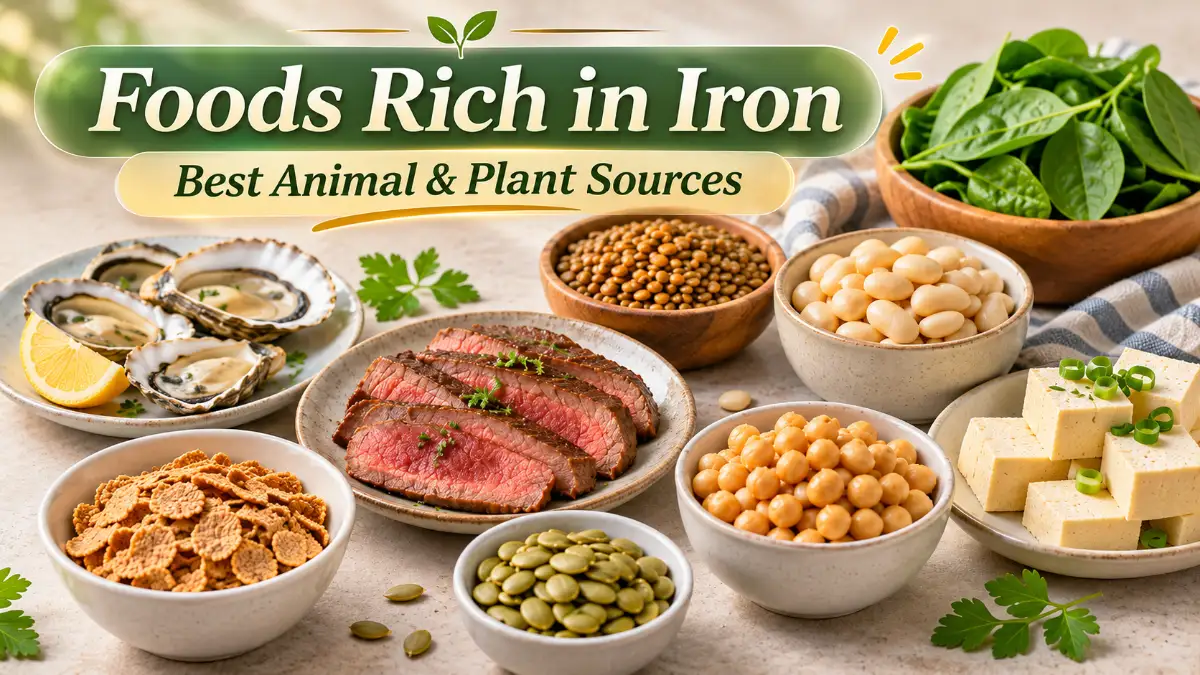
Foods rich in iron include oysters, beef liver, white beans, lentils, spinach, tofu, pumpkin seeds, chickpeas, and iron-fortified cereals. Some of the best sources are cooked eastern oysters, providing approximately 8 mg per 3 ounces, and canned white beans, offering 8 mg per cup. Cooked lentils provide around 3 mg per half-cup serving.
Both animal-based and plant-based foods can help you meet your daily iron needs. However, the body generally absorbs iron from meat and seafood more efficiently than iron from plant foods. Pairing plant-based sources with vitamin C-rich foods, such as bell peppers, tomatoes, or citrus fruits, can improve absorption.
Best Foods Rich in Iron: List With Amounts per Serving
The following iron rich foods list includes practical serving sizes and approximate iron quantities based on the National Institutes of Health (NIH) iron food-source data.
| Food | Serving Size | Iron (mg) |
| Iron-fortified cereal (100% DV) | 1 labeled serving | 18 |
| Cooked eastern oysters | 3 oz | 8 |
| Canned white beans | 1 cup | 8 |
| Pan-fried beef liver | 3 oz | 5 |
| Cooked lentils | ½ cup | 3 |
| Cooked spinach | ½ cup | 3 |
| Firm tofu | ½ cup | 3 |
| Cooked chickpeas | ½ cup | 2 |
| Canned kidney beans | ½ cup | 2 |
| Cooked beef, bottom round | 3 oz | 2 |
| Canned sardines | 3 oz | 2 |
| Roasted cashews | 1 oz | 2 |
| Baked potato with skin | 1 medium | 2 |
| Cooked green peas | ½ cup | 1 |
| Raisins | ¼ cup | 1 |
These values are rounded estimates. Iron content varies with preparation, variety, and fortification. The cereal figure applies specifically to products providing 100% of the US Daily Value for iron, not every fortified cereal.
Animal-Based Foods High in Iron
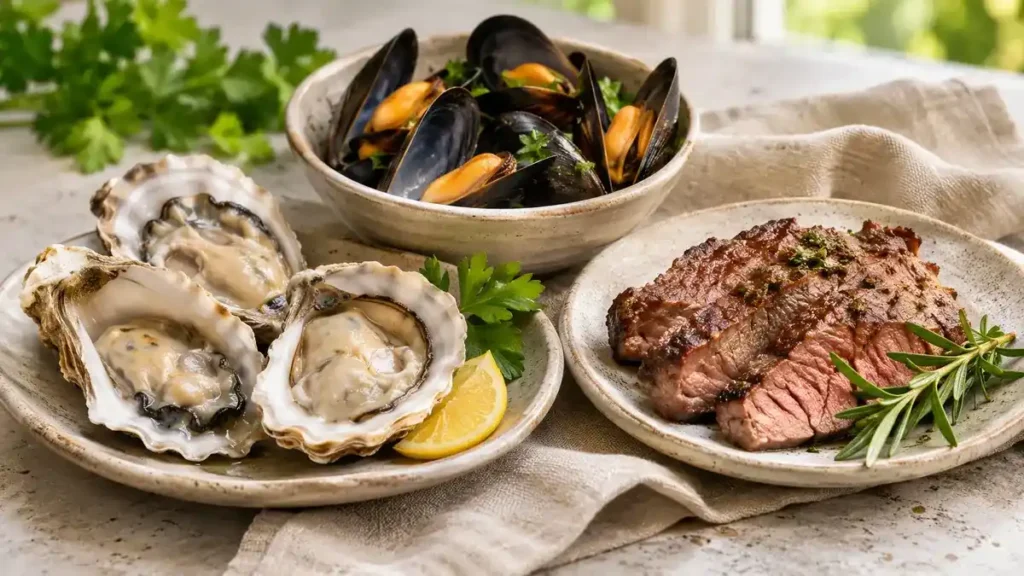
Meat and seafood are useful sources of dietary iron because they contain heme iron, which the body generally absorbs more readily than non-heme iron.
Shellfish: Oysters and mussels are particularly useful choices. Cooked eastern oysters provide approximately 8 mg per 3 ounces, making them one of the more concentrated natural sources. Shellfish should be thoroughly cooked, especially for people at greater risk of foodborne illness.
Beef and liver: A 3-ounce serving of cooked beef bottom round contains around 2 mg of iron, while the same amount of pan-fried beef liver provides approximately 5 mg. Liver is also very rich in preformed vitamin A. Pregnant individuals should avoid liver and liver products because excessive vitamin A can harm fetal development, as explained in the NHS pregnancy food-safety guidance.
Fish and poultry: Canned sardines provide roughly 2 mg per 3 ounces. Chicken and turkey also contribute iron, although typically less per serving than oysters or liver.
Plant-Based Iron-Rich Foods
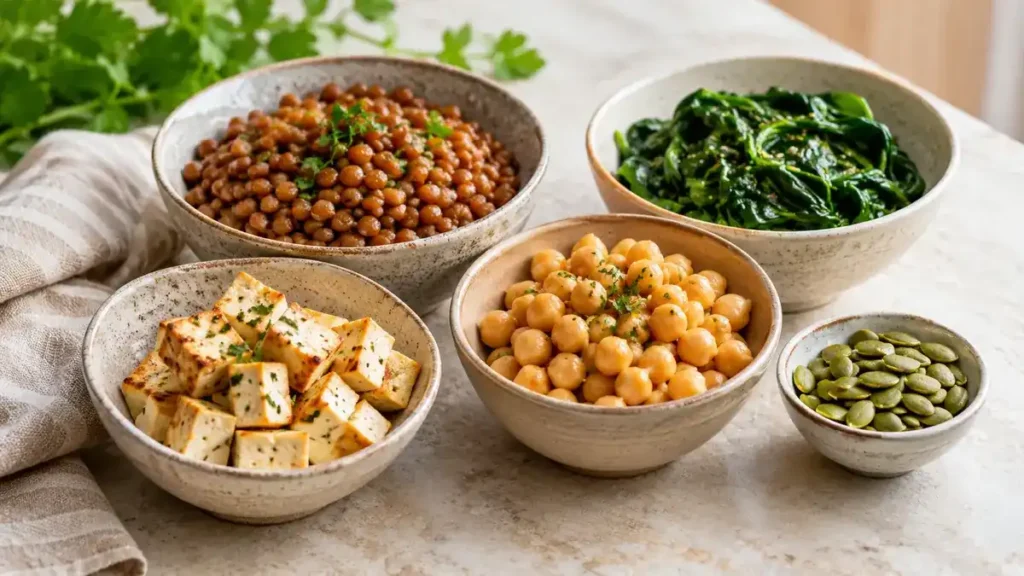
Vegetarians and vegans can obtain iron from legumes, soy products, vegetables, nuts, seeds, and fortified grains. These foods provide non-heme iron, making variety and thoughtful meal combinations especially valuable.
Beans, Lentils, Chickpeas, and Tofu
Lentils are among the easiest iron-containing foods to include in everyday meals. Half a cup of cooked lentils provides approximately 3 mg of iron, making them useful in soups, curries, salads, and grain bowls. White beans provide approximately 8 mg per cup, while half a cup of cooked chickpeas or canned kidney beans contributes around 2 mg.
Firm tofu offers approximately 3 mg per half cup. It works well in stir-fries, vegetable bowls, and soups, particularly when paired with vitamin C-rich vegetables.
Iron-Rich Vegetables and Fruits
Cooked spinach provides approximately 3 mg of iron per half cup. However, spinach contains compounds that limit iron absorption, so its iron content should not be confused with the amount the body can use. Other vegetable options include green peas, broccoli, and baked potatoes with their skins.
Most fresh fruits contain relatively little iron. Dried fruits, including raisins and dried apricots, can make modest contributions. A quarter cup of raisins contains approximately 1 mg. Fruits are often more valuable in iron-containing meals for their vitamin C content than for their iron content.
Nuts, Seeds, and Fortified Foods
Pumpkin seeds are a useful plant-based iron source. According to USDA food composition data, their iron content varies depending on whether the seeds are hulled and how they are prepared. An ounce of roasted pumpkin and squash seed kernels provides approximately 2.3 mg of iron. Roasted cashews contain approximately 2 mg per ounce, while pistachios and sesame seeds can also contribute iron.
Some fortified breakfast cereals supply considerably more iron than naturally occurring sources, with certain products providing 18 mg per serving. Always check the Nutrition Facts label, since fortification varies between brands. The FDA’s Nutrition Facts label guidance explains how to interpret Daily Values. For iron, the US Daily Value is 18 mg for adults and children aged four and older, although individual requirements differ.
Heme vs. Non-Heme Iron: What’s the Difference?
Dietary iron occurs in two main forms.
Heme iron is found in animal foods, particularly meat, poultry, and seafood. It is generally absorbed more efficiently and is less affected by other dietary components. Non-heme iron is found in beans, lentils, vegetables, nuts, seeds, and fortified foods. Animal foods can also contain non-heme iron. Its absorption depends more strongly on what else is consumed during a meal.
For example, a serving of spinach may contain more iron than a serving of beef, but that does not mean the body will absorb more iron from the spinach.
How to Improve Iron Absorption From Food
Vitamin C helps the body absorb non-heme iron. You do not need complicated recipes; combining familiar ingredients can improve how effectively your body uses dietary iron.
Practical combinations include:
- Lentils with tomatoes: Add fresh tomatoes or tomato-based sauce to lentil soup or curry.
- Spinach with bell peppers: Combine cooked spinach with red or yellow bell peppers.
- Chickpeas with lemon juice: Dress chickpea salads with freshly squeezed lemon.
- Beans with citrus fruits: Serve a bean-based meal alongside orange or grapefruit segments.
- Tofu with broccoli: Prepare tofu with broccoli and bell peppers in a stir-fry.
Tea and coffee contain polyphenols that can reduce non-heme iron absorption when consumed with meals. People who struggle to meet their iron requirements may benefit from having these drinks between meals instead. A varied diet containing appropriate iron sources and vitamin C-rich produce is usually more practical than trying to calculate absorption from every meal.
How Much Iron Do You Need Daily?
Iron requirements differ by age, sex, and life stage. The following amounts are US Recommended Dietary Allowances (RDAs).
| Age or Life Stage | Daily Iron Requirement |
| Infants, 7-12 months | 11 mg |
| Children, 1-3 years | 7 mg |
| Children, 4-8 years | 10 mg |
| Children, 9-13 years | 8 mg |
| Boys, 14-18 years | 11 mg |
| Girls, 14-18 years | 15 mg |
| Men, 19 years and older | 8 mg |
| Women, 19-50 years | 18 mg |
| Women, 51 years and older | 8 mg |
| Pregnancy, ages 14-50 | 27 mg |
| Breastfeeding, ages 14-18 | 10 mg |
| Breastfeeding, ages 19-50 | 9 mg |
These recommendations reflect typical nutritional needs, not treatment doses. The NIH estimates that people following vegetarian diets need approximately 1.8 times as much dietary iron as people who eat meat because plant-based iron is generally less bioavailable. This is a general dietary recommendation, not a personalized requirement. Menstruation, pregnancy, and certain medical conditions can also affect iron needs.
Can Iron-Rich Foods Help With Iron-Deficiency Anemia?
Iron-rich foods can help improve dietary iron intake and support the prevention of iron deficiency. However, food alone may not be sufficient to correct established iron-deficiency anemia. Iron deficiency can develop from inadequate intake, blood loss, increased requirements, or problems absorbing iron. Possible symptoms include fatigue, weakness, and shortness of breath, although these symptoms can have other causes.
A healthcare professional may use blood tests, including hemoglobin and ferritin, to evaluate iron status and determine whether treatment is necessary. If you have confirmed iron deficiency, improving your meals with foods such as lentils, beans, seafood, and fortified cereals can support an appropriate treatment plan. Avoid starting high-dose iron supplements without medical guidance, as excessive iron can be harmful.
Frequently Asked Questions
Iron-fortified breakfast cereals, oysters, white beans, beef liver, lentils, and cooked spinach are among the foods high in iron. Some fortified cereals provide 18 mg per serving, while cooked eastern oysters and canned white beans each provide approximately 8 mg per specified serving.
Dried fruits such as raisins and dried apricots contain more concentrated amounts of iron than many fresh fruits. A quarter cup of raisins provides approximately 1 mg of iron. However, fruits generally contain less iron than legumes, meat, seeds, and fortified cereals.
Yes, a well-planned vegetarian or vegan diet can provide sufficient iron through lentils, beans, tofu, chickpeas, pumpkin seeds, and fortified cereals. Because plant-based iron is absorbed less efficiently, combining these foods with vitamin C-rich vegetables and fruits can help improve absorption.
Useful choices include lean beef, cooked shellfish, lentils, white beans, tofu, chickpeas, and iron-fortified cereals. Pair plant-based sources with vitamin C-rich foods to support absorption. If blood tests confirm iron deficiency or iron-deficiency anemia, dietary changes alone may not be enough, and medical treatment may be necessary.