
Your eyes water when you yawn because the muscles around your face and eyelids tighten, creating pressure around your tear-producing glands and drainage system. These facial contractions may squeeze the lacrimal glands or temporarily change how tears drain, causing moisture to collect and spill over your eyelids. Occasional watery eyes during yawning are generally normal and harmless, especially when you have no other eye symptoms.
Your eyes continuously produce tears to keep their surfaces moist, comfortable, and protected from irritation. Normally, blinking spreads these tears evenly, while small drainage passages carry excess fluid toward your nose. Yawning can briefly affect this balance. However, if your eyes frequently water even when you’re not yawning, conditions such as dry eyes, allergies, or blocked tear ducts may be responsible.
Why Does Yawning Make Your Eyes Water?
When you yawn, you open your mouth widely, stretch your jaw, and contract several facial muscles. Your cheeks may lift, and your eyelids often narrow or squeeze shut. These movements create pressure around the lacrimal glands, which produce the watery component of tears. Forceful facial contractions during yawning may also temporarily affect the structures involved in tear drainage.
As a result, tears can accumulate along your eyelids and sometimes roll down your cheeks. According to Washington State University’s Ask Dr. Universe, facial muscle contractions during yawning can put pressure on the structures responsible for producing and draining tears. Although this is a plausible explanation, scientists haven’t fully established how much yawning-related tearing comes from gland compression versus temporary changes in tear distribution or drainage.
The important distinction is that ordinary blinking helps distribute and drain tears. It’s the stronger facial movements associated with yawning that may briefly alter this process.
How Do Lacrimal Glands and Tear Ducts Work?
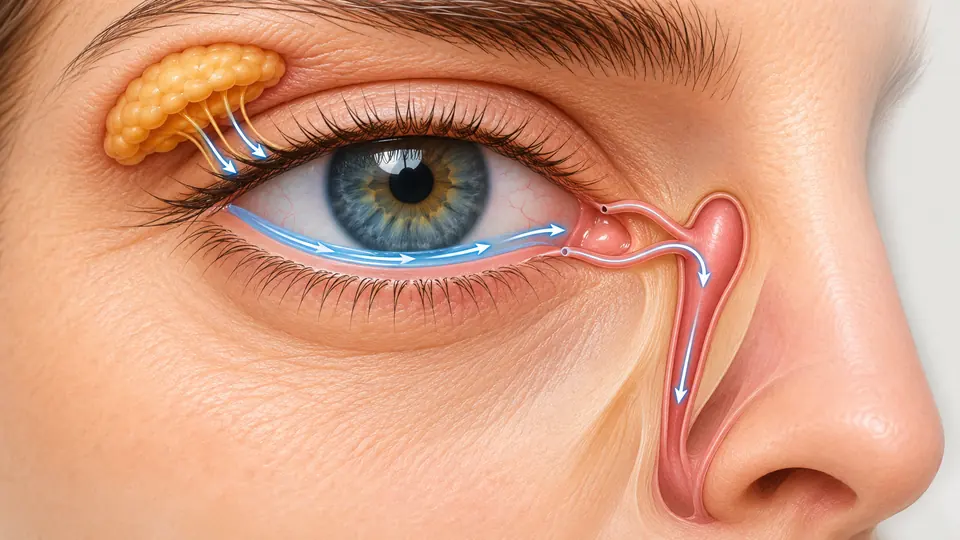
Your eyes have a natural system for producing, distributing, and draining tears. Three main components work together to keep your eyes healthy.
- Lacrimal glands: Located above the outer portion of each eye, these glands produce the watery component of tears that helps lubricate and protect the eye’s surface.
- Eyelids: Every time you blink, your eyelids spread a thin tear film across your eyes, keeping them moist and helping remove small particles.
- Tear drainage system: Tiny openings called puncta sit near the inner corners of your eyelids. Tears enter these openings, travel through small channels called canaliculi, reach the lacrimal sac, and eventually drain into the nose through the nasolacrimal duct.
The National Eye Institute explains how tears work, including their role in keeping the eyes smooth, supporting clear vision, and protecting against irritation.
Most of the time, tear production and drainage remain balanced. Yawning can briefly change how tears move around the eyes, making the moisture more noticeable.
Why Do Some People’s Eyes Water More When They Yawn?
Not everyone experiences watery eyes during yawning to the same degree. Differences in facial movements, tear production, drainage, and existing eye conditions can influence how much tearing occurs.
Several factors may make your eyes water more easily.
1. Dry Eyes
It might seem surprising, but dry eyes can sometimes produce excessive watery tears. When the surface of your eye becomes too dry, irritation can trigger reflex tearing. This sudden production of watery tears may make your eyes more likely to overflow when you yawn.
2. Allergies
Dust, pollen, pet dander, and other allergens can irritate your eyes, leading to itching, redness, and excessive tearing. If your eyes are already watery from allergies, the facial movements associated with yawning may make the moisture more noticeable.
3. Environmental Irritation
Wind, smoke, air conditioning, and dry indoor air can disturb your eyes’ protective tear film. Your eyes may respond by producing additional tears, which can become more noticeable during a yawn.
4. Screen-Related Dryness and Fatigue
Spending long periods looking at digital screens can reduce how often you blink. This may increase tear evaporation and contribute to dry-eye symptoms. You may also yawn more frequently when tired, making the two experiences occur together. However, tiredness alone doesn’t necessarily explain excessive tearing.
The National Eye Institute identifies several causes of dry eyes, including environmental conditions and other factors that interfere with normal tear function.
Is It Normal for Your Eyes to Water When You Yawn?
Yes. If your eyes water briefly when you yawn, and the tearing stops shortly afterward, it’s generally a normal physical response. Some people experience only slight moisture around their eyelids, while others notice visible tears rolling down their cheeks. Both can occur without indicating an eye problem.
Normal yawning-related tears are typically clear and watery. They shouldn’t cause persistent redness, significant discomfort, or vision changes. However, thick, sticky, or unusual eye discharge is different from ordinary tears and may indicate irritation, infection, or another condition requiring medical attention.
When Should You Worry About Watery Eyes?
Occasional tearing during yawning usually doesn’t require treatment. However, persistent watering or additional symptoms may indicate an underlying eye condition.
Consider consulting an eye-care professional if you experience:
- Frequent or continuous tearing unrelated to yawning.
- Persistent redness, itching, burning, or discomfort.
- Thick, sticky, or unusual eye discharge.
- Repeated excessive watering from only one eye.
- Swelling or tenderness near the inner corner of your eye.
- Ongoing blurred vision or unexplained eye irritation.
Possible causes include dry-eye disease, allergies, inflammation, infection, or blocked tear drainage passages. According to MedlinePlus’s guidance on watery eyes, prolonged unexplained tearing, painful redness, and substantial eye discharge are reasons to seek medical evaluation.
Seek urgent medical care if you experience sudden vision loss, severe eye pain, a serious eye injury, or chemical exposure. These symptoms shouldn’t be attributed to normal yawning-related tears.
How Can You Reduce Excessive Eye Watering?
If your eyes only water briefly when you yawn, you generally don’t need treatment. The tearing should settle naturally.
However, if your eyes frequently water or feel uncomfortable, these practical steps may help:
- Take regular screen breaks. Look away from digital screens periodically and make an effort to blink naturally.
- Avoid common irritants. Reduce exposure to smoke, dust, strong wind, and direct air conditioning when possible.
- Manage dry-eye symptoms. Over-the-counter artificial tears may help mild dryness, although they aren’t suitable treatments for every cause of watery eyes.
- Avoid rubbing your eyes. Rubbing can worsen irritation, particularly when allergies are involved.
- Protect your eyes outdoors. Sunglasses may help reduce exposure to wind and airborne irritants.
- Consult an eye-care professional. Persistent tearing may require assessment for dry eyes, allergies, or drainage problems.
The National Eye Institute’s dry-eye guidance describes treatments and lifestyle adjustments that may help, depending on the underlying cause. The goal isn’t to prevent normal tears during yawning. It’s to address any irritation or eye condition that may be causing excessive watering.
Frequently Asked Questions
Each yawn involves slightly different facial movements and muscle contractions. The amount of moisture already present in your eyes and how efficiently your tears drain can also vary. Because these conditions aren’t identical every time, you may notice tears during some yawns but not others.
Both involve the eyes’ tear-producing system, but their triggers are different. Yawning-related tears are associated with physical facial movements and possible changes in tear drainage. Emotional crying involves responses from the nervous system to feelings such as sadness, happiness, or stress. Tears during yawning don’t necessarily have any emotional meaning.


