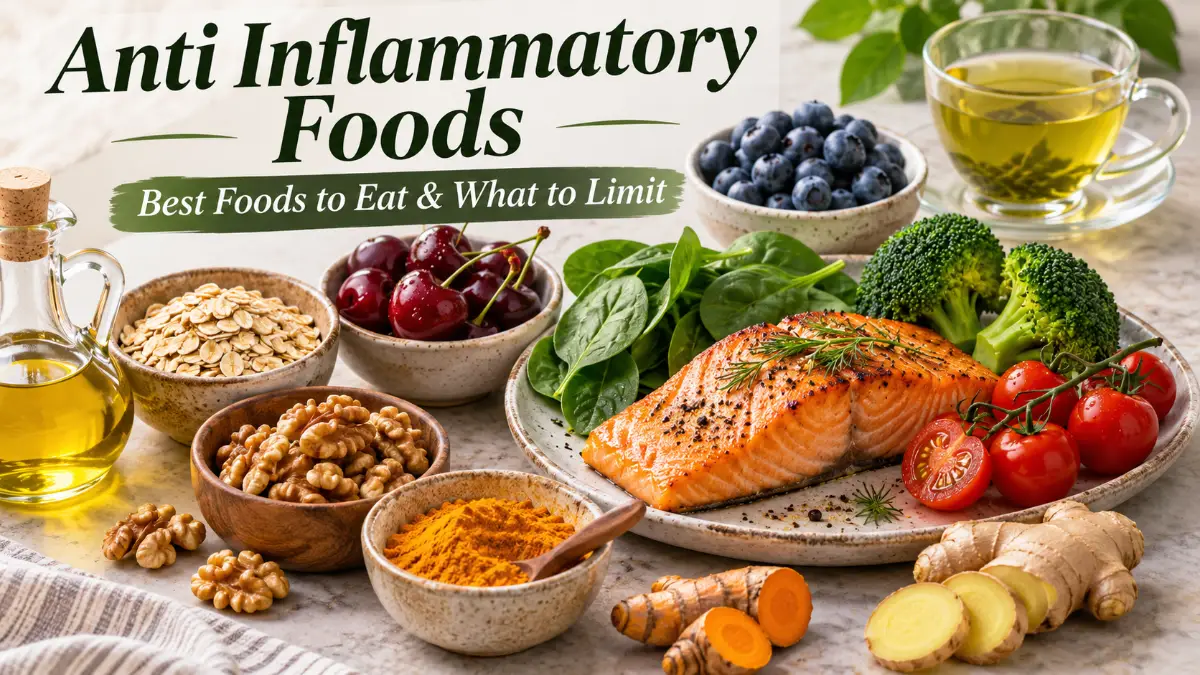
Anti inflammatory foods include berries, cherries, spinach, broccoli, tomatoes, salmon, walnuts, olive oil, whole grains, and legumes. These foods provide antioxidants, polyphenols, fiber, and healthy fats that may help regulate inflammation. Eating a variety of these nutrient-rich foods regularly is more beneficial than relying on one ingredient or a so-called superfood.
Inflammation isn’t always harmful. Acute inflammation helps your body fight infections and heal injuries. However, chronic inflammation can persist and contribute to long-term health problems, including heart disease and type 2 diabetes. According to the Harvard T.H. Chan School of Public Health, a balanced dietary pattern rich in plant foods and healthy fats may help manage chronic low-grade inflammation.
What Are Anti-Inflammatory Foods?
Anti-inflammatory foods are nutrient-rich foods containing compounds that may support the body’s normal inflammatory response. Their potential benefits involve several biological processes rather than immediately eliminating inflammation.
Their most relevant nutrients and compounds include:
- Omega-3 fatty acids: Healthy fats involved in regulating inflammatory processes, especially EPA and DHA from fatty fish.
- Antioxidants: Compounds that help protect cells against oxidative damage. These include vitamin C and carotenoids.
- Polyphenols: Plant compounds found in berries, tea, vegetables, and olive oil that may influence inflammation-related signaling.
- Dietary fiber: Supports beneficial gut bacteria, some of which produce compounds involved in immune regulation.
No individual nutrient guarantees lower inflammation. The combination of foods eaten consistently matters most.
Best Anti-Inflammatory Foods to Eat
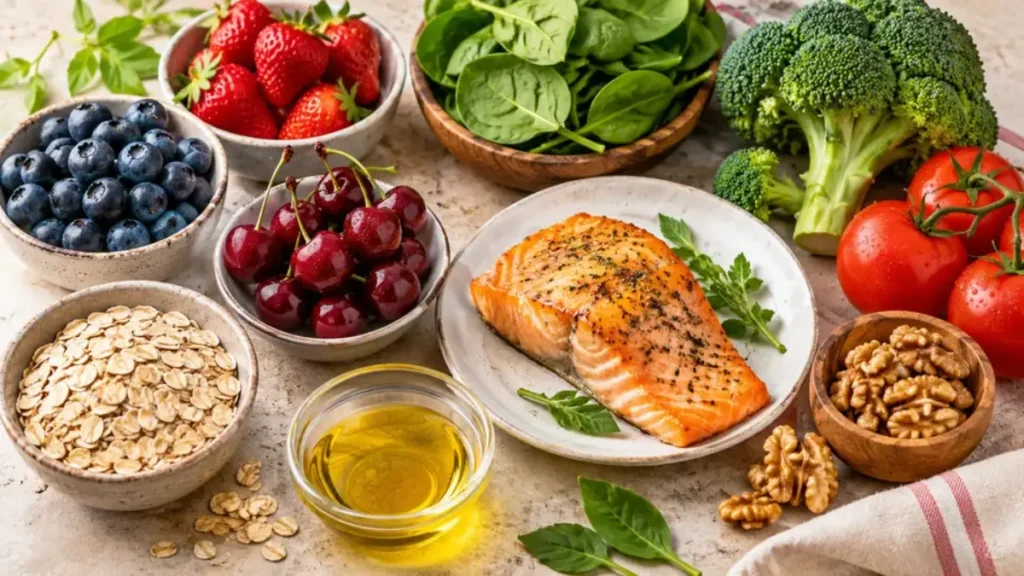
The best anti-inflammatory foods come from several food groups. Choosing a variety provides different nutrients without requiring expensive supplements or restrictive diets.
1. Fruits and Vegetables
Colorful fruits and vegetables contain antioxidants, vitamins, fiber, and plant compounds associated with better health.
Some excellent choices include:
- Blueberries and strawberries: Provide anthocyanins and other polyphenols.
- Cherries: Contain anthocyanins and additional antioxidant compounds.
- Oranges and citrus fruits: Supply vitamin C, which supports normal antioxidant defenses.
- Spinach and kale: Offer carotenoids, vitamins, and fiber.
- Broccoli: Provides vitamin C, fiber, and glucosinolate-derived compounds.
- Tomatoes: Contain lycopene, a carotenoid with antioxidant properties.
Harvard Health includes leafy vegetables, tomatoes, berries, and cherries among foods commonly recommended in anti-inflammatory eating patterns.
Fresh, frozen, and unsweetened canned produce can all be useful choices.
2. Whole Grains and Legumes
Whole grains and legumes are important anti-inflammatory diet foods because they supply fiber and other nutrients. Good options include oats, barley, brown rice, quinoa, lentils, chickpeas, black beans, and kidney beans.
Certain gut bacteria ferment dietary fiber, producing short-chain fatty acids involved in intestinal health and immune regulation. Try oatmeal for breakfast, lentils with lunch, or beans added to soups and salads. These foods also supply plant protein. For more meal-planning options, explore these high-protein foods.
3. Nuts, Seeds, and Healthy Oils
Nuts, seeds, and unsaturated oils provide beneficial fats that fit naturally into an anti-inflammatory eating pattern.
- Walnuts: Provide alpha-linolenic acid (ALA), a plant-based omega-3 fatty acid.
- Chia and flaxseeds: Supply ALA omega-3s and fiber.
- Almonds: Contain vitamin E, fiber, and monounsaturated fats.
- Extra-virgin olive oil: Provides monounsaturated fats and polyphenols.
- Avocados: Supply fiber and monounsaturated fats.
Use olive oil in salad dressings, sprinkle ground flaxseed over oatmeal, or snack on a small handful of unsalted nuts.
4. Fatty Fish
Fatty fish are particularly useful sources of EPA and DHA, two omega-3 fatty acids involved in regulating inflammatory processes. Good dietary choices include salmon, sardines, mackerel, and herring. Unlike the ALA found in walnuts and seeds, EPA and DHA are long-chain omega-3 fats. The body can convert some ALA into EPA and DHA, but this conversion is limited.
Fatty fish, alongside vegetables, whole grains, legumes, and healthy oils, forms part of the anti-inflammatory eating pattern described by Harvard’s Nutrition Source. Canned sardines or salmon can be convenient alternatives to fresh fish. People who don’t eat seafood can still build a nutritious plant-focused diet.
5. Herbs, Spices, and Drinks
Several herbs, spices, and beverages contain compounds being studied for their potential effects on inflammation.
- Turmeric: Contains curcumin, a compound with anti-inflammatory activity in laboratory research.
- Ginger: Provides gingerols and related plant compounds.
- Garlic: Contains organosulfur compounds.
- Green tea: Supplies catechins, including EGCG, a type of polyphenol.
Add turmeric to lentil dishes, ginger to soups, garlic to vegetables, and unsweetened green tea to your daily routine.
However, promising laboratory findings don’t necessarily translate into proven treatment benefits. The National Center for Complementary and Integrative Health notes that evidence remains insufficient or uncertain for using turmeric and ginger supplements to treat several inflammatory conditions.
Anti-Inflammatory Foods List at a Glance
| Food group | Best food choices | Key nutrients or compounds |
| Fruits | Blueberries, strawberries, cherries, oranges | Polyphenols, vitamin C, fiber |
| Vegetables | Spinach, kale, broccoli, tomatoes | Carotenoids, vitamins, fiber |
| Whole grains | Oats, barley, brown rice, quinoa | Dietary fiber |
| Legumes | Lentils, chickpeas, beans | Fiber, plant protein |
| Nuts and seeds | Walnuts, almonds, chia, flaxseeds | Unsaturated fats, ALA omega-3 |
| Healthy oils | Extra-virgin olive oil | Monounsaturated fats, polyphenols |
| Fatty fish | Salmon, sardines, mackerel | EPA and DHA omega-3 |
| Herbs and drinks | Turmeric, ginger, garlic, green tea | Various plant compounds |
Foods and Dietary Habits to Limit
An anti-inflammatory diet isn’t only about adding nutritious foods. It also involves reducing dietary patterns associated with chronic inflammation.
Consider limiting:
- Processed meats: Bacon, hot dogs, and sausages.
- Sugary drinks: Regular soda, sweetened teas, and sugary fruit drinks.
- Excess refined carbohydrates: Frequent servings of pastries, sweets, and refined-grain snacks.
- Fried foods: Especially when they frequently replace healthier meals.
- Highly processed foods: Particularly products high in added sugar, saturated fat, and sodium.
- Excess alcohol: Heavy drinking can negatively affect overall health.
These recommendations don’t mean every processed food, carbohydrate, dairy product, or serving of red meat is inherently inflammatory. Plain yogurt, whole grains, and minimally processed foods can fit a balanced diet.
How to Follow an Anti-Inflammatory Diet
The Mediterranean-style diet offers a practical approach because it emphasizes vegetables, fruits, whole grains, beans, nuts, olive oil, and fish. The American Heart Association recommends Mediterranean-style eating as a way to support cardiovascular health.
You can begin with a few straightforward habits: include vegetables in main meals, choose whole grains more often, replace some saturated fats with unsaturated fats, and make beans, lentils, or fish regular protein choices.
Easy Anti-Inflammatory Meal Ideas
| Meal | Simple idea |
| Breakfast | Oatmeal with blueberries, walnuts, and ground flaxseed |
| Lunch | Chickpea and spinach salad with tomatoes and olive oil dressing |
| Dinner | Baked salmon with broccoli and brown rice |
| Snack | Plain yogurt with berries or an apple with almonds |
For affordable alternatives, substitute lentils for chickpeas, seasonal vegetables for imported produce, and canned sardines for fresh salmon. Consistency matters more than following a perfect menu. Combining nutrient-rich foods throughout the week is a more realistic strategy than expecting one meal to change inflammation levels.
Frequently Asked Questions
No established timeline applies to everyone. Changes in inflammatory markers, when they occur, depend on overall eating habits, health conditions, and other lifestyle factors. Consistent dietary improvements are more meaningful than expecting immediate results.
Yes. Dairy isn’t universally inflammatory. Unsweetened yogurt, kefir, and other suitable dairy products can fit a balanced eating pattern. Choose options based on your nutritional needs, tolerance, and any medical advice you receive.
Anti-inflammatory eating is best understood as a long-term nutritional approach, not a cure. A varied diet may support healthier inflammatory regulation and overall well-being, but persistent symptoms or diagnosed inflammatory conditions require appropriate medical care.


