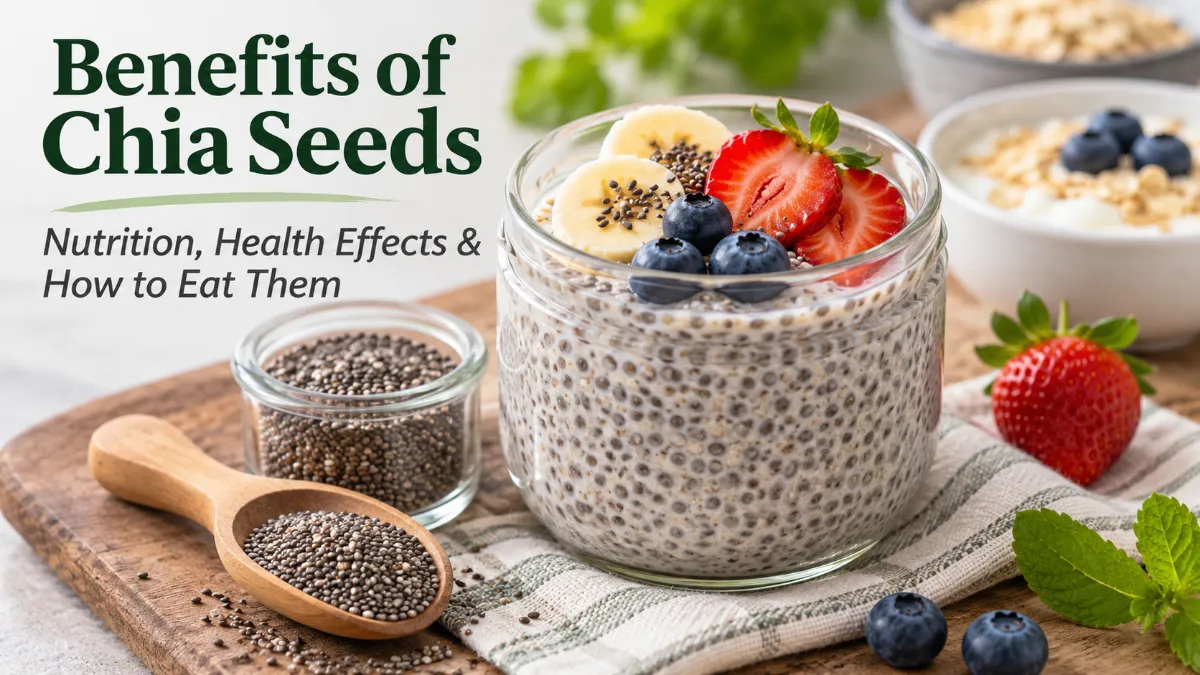
The benefits of chia seeds come largely from their high fiber content, plant-based omega-3 fatty acids, protein, and essential minerals. These tiny seeds support healthy digestion, may help you feel fuller after meals, and provide nutrients important for heart and bone health. However, research has not established that eating chia seeds alone causes significant weight loss or consistently lowers blood sugar and cholesterol.
One ounce (28 grams), roughly two tablespoons, provides nearly 10 grams of fiber along with calcium, magnesium, and healthy fats. Adding chia seeds to everyday meals is a simple way to improve your nutritional intake without making major changes to your diet.
Chia Seeds Nutrition Facts
Chia seeds come from Salvia hispanica, a flowering plant. Despite their small size, they provide a substantial amount of fiber and several essential nutrients. According to the USDA FoodData Central, approximately one ounce (28 grams) of dried chia seeds contains:
| Nutrient | Amount per 28 g |
| Calories | 136 kcal |
| Protein | 4.6 g |
| Dietary fiber | 9.6 g |
| Total fat | 8.6 g |
| Omega-3 fatty acids (ALA) | 5.0 g |
| Calcium | 177 mg |
| Magnesium | 94 mg |
| Phosphorus | 241 mg |
Values are approximate and rounded from USDA nutrient data. Actual amounts may vary slightly by product and serving weight. Chia seeds also contain iron, zinc, and naturally occurring antioxidant compounds. Their combination of fiber, unsaturated fats, and minerals makes them a useful addition to a balanced diet.
Main Health Benefits of Chia Seeds
1. Support Digestion and Gut Health
One of the clearest health benefits of chia seeds is their fiber content. Fiber helps maintain regular bowel movements and supports healthy digestive function. Chia seeds contain both insoluble fiber and gel-forming fiber that absorbs water, helping soften and add bulk to stool.
Eating enough dietary fiber also supports overall gut health. Certain types of fiber can nourish beneficial intestinal bacteria, although research has not established that chia seeds produce specific changes in the human gut microbiome. If you’re looking to increase your fiber intake beyond chia seeds, explore these high-fiber foods and their nutritional benefits, including beans, lentils, fruits, and whole grains.
2. May Help With Fullness and Weight Management
Chia seeds absorb liquid and develop a gel-like texture. Their fiber content may help you feel satisfied after eating, potentially making it easier to manage hunger between meals. However, chia seeds are not a proven weight-loss solution. A systematic review of randomized controlled trials found no significant overall reduction in body weight or body mass index from chia seed consumption.
Their usefulness for weight management depends on your overall diet. Adding chia seeds to oatmeal or yogurt may make a meal more filling, but consuming extra calories from chia seeds will not automatically lead to weight loss.
3. Provide Nutrients That Support Heart Health
Chia seeds are especially rich in alpha-linolenic acid (ALA), an essential plant-based omega-3 fatty acid. According to the NIH Office of Dietary Supplements, ALA must come from food because the body cannot produce it. Although the body can convert some ALA into EPA and DHA, this conversion is limited. Their unsaturated fats and fiber make chia seeds a useful part of a heart-healthy eating pattern.
Clinical findings are less straightforward. A review of eight randomized trials reported reductions in systolic and diastolic blood pressure, but the researchers emphasized the need for larger studies. Evidence that chia seeds consistently improve cholesterol levels remains limited. Chia seeds can contribute to cardiovascular nutrition, but they should not replace prescribed treatment or other established heart-healthy habits.
4. May Help Moderate Blood Sugar After Meals
Certain types of dietary fiber can slow digestion and carbohydrate absorption, potentially reducing how quickly blood sugar rises after a meal.
Chia seeds contain fiber, but this general mechanism does not mean they reliably improve blood sugar control in people. A systematic review of clinical trials found no significant overall improvements in fasting blood glucose, HbA1c, or insulin levels from chia seed consumption. Chia seeds can be included in a balanced diet for people managing blood sugar, but they are not a diabetes treatment.
5. Contribute to Bone Health
Chia seeds provide several minerals involved in maintaining healthy bones. Calcium is essential for bone structure, magnesium contributes to normal bone function, and phosphorus is another important component of bones and teeth. A 28-gram serving supplies approximately 177 mg of calcium, 94 mg of magnesium, and 241 mg of phosphorus.
These nutrients contribute to overall bone nutrition, although eating chia seeds alone has not been shown to prevent osteoporosis or fractures.
6. Provide Plant Protein and Antioxidants
Chia seeds contain approximately 4.6 grams of protein per ounce, including all nine essential amino acids. Although they provide complete protein, the amount in a typical serving is modest compared with foods such as lentils, Greek yogurt, or tofu. Still, chia seeds can complement a varied plant-based diet.
They also contain naturally occurring antioxidant compounds, including phenolic substances. These compounds demonstrate antioxidant activity in laboratory studies, but their specific disease-prevention effects in humans remain uncertain.
What Happens When You Eat Chia Seeds Every Day?
Eating chia seeds regularly can help increase your intake of fiber, plant-based omega-3 fatty acids, protein, and essential minerals. Over time, sufficient dietary fiber may support more regular bowel movements and improve overall dietary quality. Some people may also find that meals containing chia seeds keep them satisfied longer.
The effects depend on your existing diet, portion sizes, and digestive tolerance. There is no reliable evidence that daily chia seed consumption automatically burns fat, detoxifies the body, or produces dramatic improvements in health markers.
How Much Chia Seeds Should You Eat Daily?
For many healthy adults, one to two tablespoons of chia seeds per day is a reasonable, practical serving. If you are not accustomed to eating high-fiber foods, start with approximately one teaspoon to one tablespoon and gradually increase the amount as tolerated.
There is no official requirement to eat chia seeds every day. Your ideal portion depends on your overall fiber intake, calorie needs, hydration, and digestive comfort.
How to Eat Chia Seeds Safely
Chia seeds have a mild flavor, making them easy to add to both sweet and savory meals.
Here are some simple ways to eat them:
- Chia pudding: Mix chia seeds with milk or a fortified plant-based alternative and refrigerate until thickened.
- Yogurt: Stir them thoroughly into yogurt and allow them to hydrate.
- Oatmeal: Add chia seeds to hot oatmeal or overnight oats.
- Smoothies: Blend them with fruit, yogurt, and enough liquid.
- Soups and sauces: Use hydrated chia seeds to add thickness and fiber.
For a basic chia pudding, mix two tablespoons of chia seeds with about half a cup of milk. Stir thoroughly, let the mixture rest, stir again to prevent clumping, and refrigerate until the seeds are fully hydrated. According to Harvard’s Nutrition Source, chia seeds can be incorporated into moist foods without always needing to soak them separately. The important precaution is to avoid swallowing spoonfuls of dry chia seeds on their own.
Side Effects and Precautions
Chia seeds are generally well tolerated when eaten in reasonable amounts and prepared properly. However, increasing fiber intake too quickly may cause bloating, gas, or abdominal discomfort. Drinking enough fluids is especially important when adding more fiber to your diet. Never swallow spoonfuls of dry chia seeds by themselves. They absorb liquid and expand, potentially creating a choking or esophageal blockage risk.
Memorial Sloan Kettering Cancer Center advises particular caution for people with swallowing difficulties. Allergic reactions have also been reported, and people taking blood-pressure medication should discuss substantial increases in chia consumption with a healthcare professional. The most practical approach is to enjoy chia seeds as part of a varied, balanced diet rather than relying on them to deliver dramatic health changes on their own.
Frequently Asked Questions
Chia seeds provide fiber, plant-based omega-3 fatty acids, protein, and essential minerals. Their main benefits include supporting healthy digestion, contributing to heart and bone health, and potentially helping you feel fuller after meals. However, their effects on weight loss, cholesterol, and blood sugar are not consistently supported by clinical research.
Yes, eating chia seeds daily can be a healthy habit for most adults. They provide fiber, healthy fats, and minerals that contribute to overall nutrition. One to two tablespoons per day is a practical serving for many people. Start with smaller amounts if your diet is low in fiber, and drink enough fluids to avoid digestive discomfort.
Chia seeds may support appetite management because their fiber absorbs water and can help you feel fuller. However, there is no convincing evidence that chia seeds specifically burn belly fat or cause significant weight loss. Long-term weight management depends primarily on overall eating habits, physical activity, and energy balance.
Chia seeds can support regular bowel movements because they contain both soluble and insoluble fiber. When consumed with sufficient fluid, their fiber helps add bulk to stool and supports digestive function. However, suddenly eating large quantities may cause gas or bloating, so gradually increasing your intake is recommended.
Soaking chia seeds is helpful but not always necessary. You can safely mix them into moist foods such as yogurt, oatmeal, and smoothies, allowing them to hydrate before eating. Avoid swallowing spoonfuls of dry chia seeds because they can expand after absorbing liquid and potentially cause choking or an esophageal blockage.
People with swallowing difficulties should avoid dry chia seeds because they can swell and become lodged in the esophagus. Anyone with a known chia seed allergy should avoid them. People taking blood-pressure medication or experiencing persistent digestive problems should consult a healthcare professional before substantially increasing their chia seed intake.


