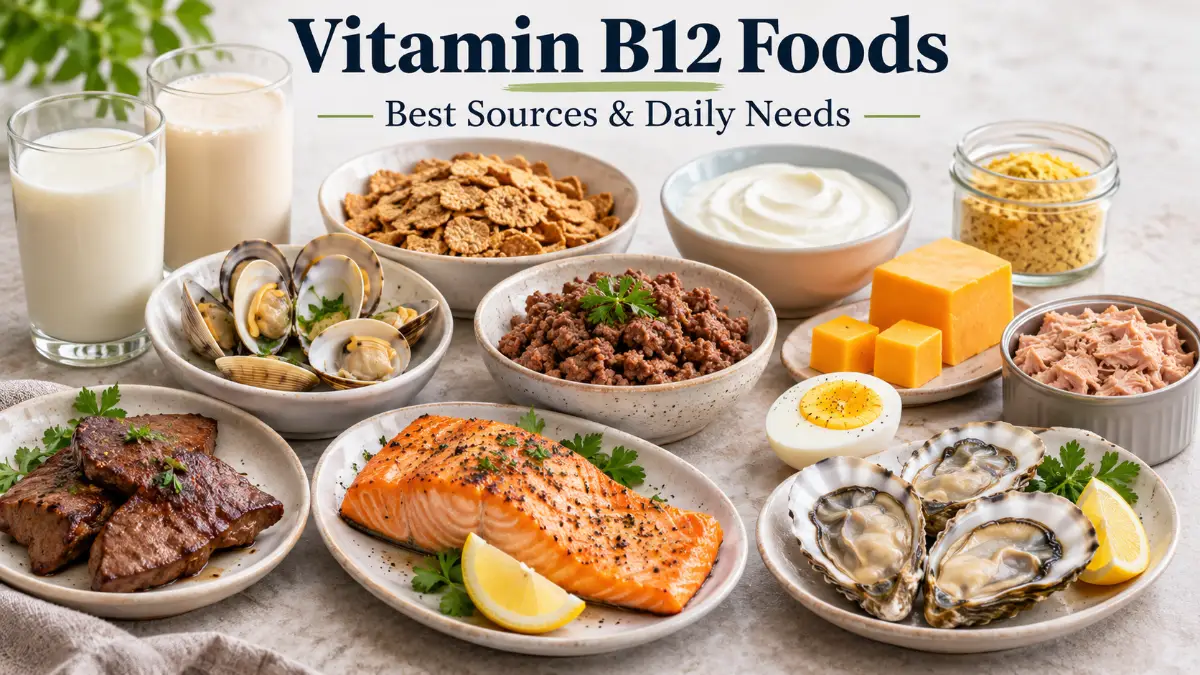
The best vitamin B12 foods include beef liver, clams, oysters, salmon, tuna, beef, eggs, milk, and dairy products. Beef liver is one of the richest natural sources, providing approximately 70.7 micrograms (mcg) in a 3-ounce serving. Vegetarians can get vitamin B12 from eggs and dairy, while vegans can choose fortified breakfast cereals, nutritional yeast, and certain plant-based milks. Most adults need 2.4 mcg of vitamin B12 daily.
Vitamin B12 helps maintain healthy red blood cells, supports normal nerve function, and plays an essential role in DNA production. Although animal-derived foods naturally contain this vitamin, people who avoid them need dependable fortified sources or supplements. Comparing the amount of B12 in everyday foods can help you choose meals that meet your nutritional needs.
Foods High in Vitamin B12: Amounts per Serving
Some foods provide more than the daily requirement of vitamin B12 in a single serving, while others contribute smaller amounts throughout the day.
The table below compares common food sources using the National Institutes of Health (NIH) vitamin B12 food-source data.
| Vitamin B12 food | Serving size | B12 (mcg) | Daily Value |
| Beef liver, pan-fried | 3 oz (85 g) | 70.7 | 2,944% |
| Clams, cooked without shells | 3 oz (85 g) | 17.0 | 708% |
| Eastern oysters, cooked | 3 oz (85 g) | 14.9 | 621% |
| Fortified nutritional yeast | About ¼ cup | 8.3-24 | 346-1,000% |
| Atlantic salmon, cooked | 3 oz (85 g) | 2.6 | 108% |
| Canned light tuna, in water | 3 oz (85 g) | 2.5 | 104% |
| Ground beef, 85% lean, cooked | 3 oz (85 g) | 2.4 | 100% |
| Milk, 2% | 1 cup (240 mL) | 1.3 | 54% |
| Plain nonfat yogurt | 6 oz (170 g) | 1.0 | 43% |
| Fortified breakfast cereal | 1 serving | 0.6 | 25% |
| Cheddar cheese | 1½ oz (43 g) | 0.5 | 19% |
| Cooked egg | 1 large | 0.5 | 19% |
| Roasted turkey breast | 3 oz (85 g) | 0.3 | 14% |
Note: These are approximate reference values. Vitamin B12 content varies by food variety, preparation, and brand. The cereal example represents a product providing 25% of the Daily Value, while nutritional yeast values apply only to fortified varieties. Percentage values reflect the NIH reference table and may differ slightly from calculations using rounded mcg amounts.
For additional food-specific information, the USDA FoodData Central database provides detailed nutrient records for different foods and preparations.
Best Animal-Based Sources of Vitamin B12
Animal-derived foods are the primary natural sources of vitamin B12. Many also provide protein, iron, and other nutrients. Fish, meat, eggs, and dairy products are particularly useful because they can contribute to both vitamin B12 intake and an overall diet containing high-protein foods.
Liver, Shellfish, and Fish
Beef liver stands out for its vitamin B12 concentration, containing approximately 70.7 mcg per 3-ounce serving. However, liver is also extremely rich in preformed vitamin A, so eating large portions frequently isn’t advisable.
Pregnant people should avoid liver and liver products because their high vitamin A content may harm fetal development, as explained in the NHS pregnancy food-safety guidance.
Clams and oysters are excellent alternatives. Three ounces of cooked clams provide approximately 17 mcg of vitamin B12, while cooked eastern oysters supply around 14.9 mcg. Both are also among the animal-based foods rich in iron.
For more familiar everyday meals, salmon and tuna offer substantial amounts of B12. A 3-ounce portion of cooked Atlantic salmon provides about 2.6 mcg, while canned light tuna supplies approximately 2.5 mcg.
Salmon also contains omega-3 fatty acids, making it a useful choice for people who want more nutritional benefits from their seafood meals.
Meat, Eggs, Milk, and Dairy Products
Beef, eggs, milk, yogurt, and cheese provide practical ways to obtain vitamin B12 without relying on liver or shellfish. A 3-ounce serving of cooked 85%-lean ground beef supplies approximately 2.4 mcg, equivalent to 100% of the Daily Value. Milk and eggs contribute smaller but meaningful amounts. One cup of 2% milk provides approximately 1.3 mcg, while a large cooked egg contains around 0.5 mcg.
Dairy products can also help throughout the day. A 6-ounce serving of plain nonfat yogurt supplies about 1 mcg, and 1½ ounces of cheddar cheese provides approximately 0.5 mcg. Including a variety of these foods in regular meals can help you meet your daily vitamin B12 requirements.
Vitamin B12 Rich Foods for Vegetarians and Vegans
People following vegetarian or vegan diets can meet their vitamin B12 needs, but their food choices require different approaches.
Vitamin B12 Foods for Vegetarians
Vegetarians who consume eggs and dairy have several natural sources available, including milk, yogurt, cheese, and eggs. For example, one cup of milk combined with two large eggs provides approximately 2.3 mcg of vitamin B12. Adding yogurt or cheese later in the day can increase total intake.
These foods can be incorporated into familiar meals such as omelets, yogurt bowls, or milk-based breakfasts without making substantial dietary changes.
Vitamin B12 Foods for Vegans
Vegans cannot rely on ordinary plant foods for vitamin B12. Instead, they need a consistent supply from adequately fortified foods or appropriate supplements.
Useful fortified options include:
- Fortified nutritional yeast: Depending on the brand, approximately ¼ cup may contain 8.3-24 mcg of vitamin B12.
- Fortified breakfast cereals: A cereal providing 25% of the Daily Value supplies 0.6 mcg per serving, although other products may contain more.
- Fortified plant-based milks: Some soy, almond, and oat milks contain added vitamin B12. The exact amount depends on the product.
The NIH vitamin B12 consumer guidance identifies fortified foods and supplements as important options for people who consume little or no animal-derived food.
Simply choosing a product labeled “fortified” does not guarantee sufficient daily intake. Vegans should check how much B12 each serving provides and ensure their regular food choices or supplement routine reliably meet their needs.
What about fruits and vegetables?
Ordinary fruits, vegetables, nuts, beans, and seeds do not naturally provide reliable amounts of vitamin B12. Mushrooms, seaweed, and fermented foods should not be treated as dependable alternatives to fortified foods or supplements.
How Much Vitamin B12 Do You Need Daily?
Your vitamin B12 requirement depends on your age and life stage. The recommended daily amounts for adults are:
| Group | Recommended daily amount |
| Adults aged 19 and older | 2.4 mcg |
| Pregnant adults | 2.6 mcg |
| Breastfeeding adults | 2.8 mcg |
These are US Recommended Dietary Allowances (RDAs).
The % Daily Value displayed on US nutrition labels uses 2.4 mcg as the reference amount for adults and children aged four and older. The FDA’s Daily Value guidance explains how these percentages help consumers compare nutrient contributions between foods.
However, the amount of vitamin B12 in food is not necessarily the amount your body absorbs. Older adults and people with pernicious anemia, certain digestive disorders, or a history of gastrointestinal surgery may have difficulty absorbing B12. Anyone with a diagnosed deficiency or suspected absorption problem should seek medical advice, since dietary changes alone may not be sufficient.
Easy Ways to Get Vitamin B12 From Your Diet
Meeting your vitamin B12 needs can be straightforward when you regularly include suitable foods. For people who eat meat and fish: Include salmon, tuna, or beef in your meals. A 3-ounce serving of cooked Atlantic salmon provides approximately 2.6 mcg of B12, exceeding the standard adult Daily Value.
For vegetarians: Try eggs at breakfast, yogurt as a snack, and milk or cheese with other meals. Combining these foods throughout the day can help build a sufficient intake. For vegans: Start with breakfast cereal or plant-based milk that explicitly lists vitamin B12 on its nutrition label. Fortified nutritional yeast can also be added to pasta, popcorn, or roasted vegetables. Check the actual amount per serving rather than assuming all fortified products provide the same quantity.
The most practical approach is to choose dependable vitamin B12 sources consistently. A varied diet containing animal-derived foods or adequately fortified alternatives can support healthy intake, while people with absorption difficulties may need individualized medical guidance.
Frequently Asked Questions
Beef liver is one of the richest common sources of vitamin B12, providing approximately 70.7 mcg per 3-ounce serving. Clams and oysters are also excellent sources, containing around 17 mcg and 14.9 mcg per 3-ounce serving, respectively.
Yes. Vegetarians who consume dairy and eggs can obtain vitamin B12 from milk, yogurt, cheese, and eggs. Combining these foods throughout the day can help meet the recommended 2.4 mcg daily requirement for most adults.
Fortified breakfast cereals, fortified nutritional yeast, and vitamin B12-fortified plant-based milks are useful vegan options. Because B12 levels vary between products, vegans should check nutrition labels and ensure they have a reliable source of vitamin B12 through fortified foods or supplements.
Ordinary fruits and vegetables do not naturally contain reliable amounts of vitamin B12. Bananas, spinach, apples, and other common plant foods should not be considered dependable B12 sources. Vegans need appropriately fortified foods or supplements to meet their requirements.
One large cooked egg provides approximately 0.5 mcg of vitamin B12. That means about five eggs would supply roughly 2.5 mcg, slightly exceeding the adult daily requirement of 2.4 mcg in terms of vitamin content. However, you don’t need to obtain all your B12 from eggs; combining eggs with milk, yogurt, or other B12-rich foods is more practical.
Many healthy adults can obtain enough vitamin B12 through animal-based foods or adequately fortified products. However, people with absorption difficulties, pernicious anemia, or certain gastrointestinal conditions may require supplements or medical treatment. Eating more B12-rich foods alone may not correct an existing deficiency.


