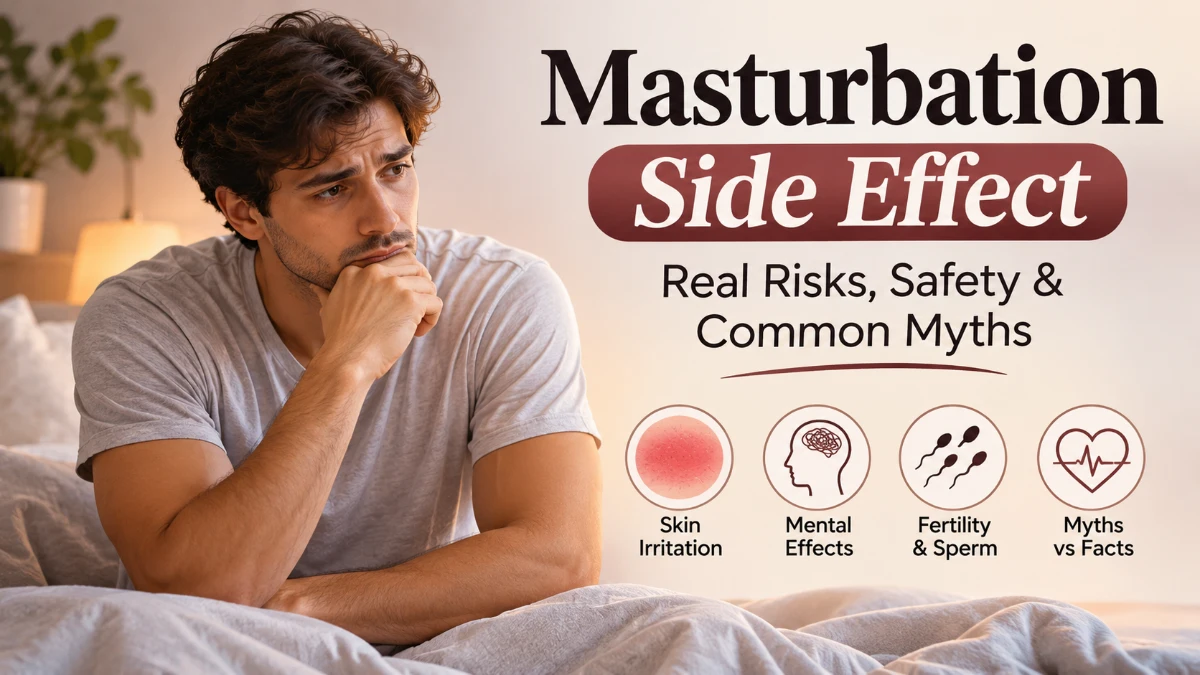
Masturbation is generally safe and does not cause serious long-term health problems. The most common masturbation side effects are temporary genital soreness, skin irritation, chafing, or mild swelling caused by rough or repeated stimulation. Masturbating every day is not automatically harmful, and there is no medically established frequency limit that applies to everyone. However, masturbation can become a concern when it causes injury, significant emotional distress, or interferes with daily life.
Many people also worry that frequent masturbation causes weakness, hair loss, infertility, erectile dysfunction, or memory problems. These claims are not supported by established medical evidence. According to the Cleveland Clinic’s medical guidance on masturbation, most physical discomfort associated with masturbation is minor and temporary.
The important distinction is between short-term discomfort, behavioral concerns that may need attention, and health risks that have no credible scientific basis.
What Are the Real Side Effects of Masturbation?
Most physical side effects of masturbation result from excessive friction, pressure, or prolonged stimulation rather than masturbation itself.
Genital soreness and skin irritation: Repeated rubbing can irritate sensitive skin around the penis, vulva, or clitoris. This may cause redness, tenderness, dryness, or a mild burning sensation.
Chafing and minor swelling: Aggressive stimulation can cause friction-related discomfort. Some people, particularly those with a penis, may notice temporary puffiness after repeated masturbation.
Temporary changes in sensitivity: Intense or repetitive stimulation may temporarily change how sensitive the genitals feel. Some people also become accustomed to particular types of pressure or stimulation, making other sensations feel different.
These effects generally improve when the irritated area is given time to recover. Persistent numbness, swelling, or pain should not be considered a normal consequence of masturbation.
Is Masturbating Every Day Harmful?
Masturbating daily is not inherently harmful. Some people masturbate several times a week, others every day, and some rarely or never do. These differences do not automatically indicate a health problem.
Planned Parenthood’s guidance on masturbation explains that masturbation is a normal sexual activity and that frequency varies considerably between individuals.
There is no specific number of times per day or week that medically defines excessive masturbation.
Frequency becomes concerning when someone continues despite physical pain, regularly sacrifices sleep or responsibilities, or repeatedly struggles to control the behavior despite negative consequences.
What matters most is whether masturbation negatively affects physical comfort, emotional well-being, relationships, or everyday functioning.
Does Masturbation Affect Fertility, Testosterone, or Sexual Performance?
Concerns about sperm production, hormone levels, and sexual performance are common, particularly among people who masturbate frequently.
Sperm Count and Fertility
Masturbation does not cause infertility or permanently reduce sperm production.
Frequent ejaculation can temporarily affect semen volume and the sperm count measured in an individual sample. However, these short-term changes do not mean someone is becoming infertile.
The testes continue producing sperm, and regular ejaculation does not permanently deplete the body’s sperm supply.
For people undergoing fertility testing, healthcare professionals may recommend a specific period without ejaculation before collecting a semen sample.
Masturbation also does not damage the uterus, ovaries, or eggs.
Testosterone, Erections, and Sexual Sensitivity
Masturbation does not cause lasting testosterone depletion. Although hormone levels fluctuate naturally, ejaculation has not been shown to cause a sustained, harmful reduction in testosterone.
Likewise, ordinary masturbation is not an established cause of erectile dysfunction.
Some individuals report difficulty responding to other forms of sexual stimulation after repeatedly using very intense pressure or a highly specific technique. However, research into these patterns is limited, and there is no established evidence that ordinary masturbation causes permanent genital desensitization.
The International Society for Sexual Medicine discusses intense masturbation habits and possible sexual-response difficulties, while noting that the commonly used term death grip syndrome is not a formally recognized medical diagnosis.
Persistent erectile difficulties, reduced sensation, or trouble reaching orgasm deserve medical assessment rather than being automatically blamed on masturbation.
Can Masturbation Affect Mental Health or Become Compulsive?
Masturbation does not inherently cause depression, anxiety disorders, memory loss, or poor concentration. Some people experience relaxation or improved mood afterward.
However, emotional and behavioral difficulties can arise in certain situations.
Guilt and anxiety: Personal beliefs, cultural expectations, or misinformation may cause someone to feel ashamed or worried about masturbating. These feelings can be distressing even when the activity causes no physical harm.
Compulsive behavior: Masturbation may become problematic when someone repeatedly struggles to control sexual urges, continues despite negative consequences, or experiences significant disruption to relationships, work, studies, or sleep.
High frequency alone does not establish a compulsive sexual behavior disorder. Feeling guilty because masturbation conflicts with personal or moral beliefs also does not, by itself, indicate a clinical disorder.
The more important concerns are persistent difficulty controlling the behavior and meaningful negative consequences in everyday life.
If masturbation feels uncontrollable or causes continuing distress, a qualified mental-health professional or sexual-health specialist can help assess the situation without judgment.
Masturbation Myths and Facts
Many supposed effects of excessive masturbation come from longstanding misconceptions rather than reliable medical evidence.
The International Society for Sexual Medicine’s overview of masturbation myths helps distinguish established sexual-health information from unsupported claims.
| Common myth | Medical fact |
| Masturbation causes infertility | Masturbation does not cause infertility. |
| Masturbation permanently lowers sperm count | Ejaculation can temporarily affect semen samples but does not permanently deplete sperm production. |
| Masturbation causes erectile dysfunction | Ordinary masturbation is not an established cause of erectile dysfunction. |
| Masturbation depletes testosterone | There is no evidence of lasting testosterone depletion from masturbation. |
| Masturbation causes hair loss | No established causal link exists. |
| Masturbation causes acne | There is no reliable evidence that masturbation causes acne. |
| Masturbation causes blindness | This is a medically unsupported myth. |
| Masturbation causes memory loss | There is no established evidence that masturbation damages memory. |
| Masturbation causes permanent physical weakness | Masturbation does not cause lasting physical weakness or nutritional depletion. |
Feeling relaxed or briefly tired after orgasm is different from experiencing harmful physical weakness. Persistent fatigue, memory difficulties, or sexual dysfunction should be evaluated separately rather than automatically attributed to masturbation.
How to Prevent Irritation and When to See a Doctor
A few practical habits can reduce the likelihood of uncomfortable physical side effects.
- Use gentle stimulation: Avoid excessive pressure, rough movements, and prolonged friction.
- Consider lubrication: A suitable, unscented personal lubricant can reduce friction and improve comfort.
- Maintain hygiene: Wash your hands and clean reusable sex toys according to their instructions.
- Allow recovery time: Stop stimulation when the skin becomes sore or irritated, and resume only after the discomfort settles.
- Avoid irritating products: Harsh soaps, fragranced lotions, or unsuitable lubricants may aggravate sensitive genital skin.
Minor irritation often settles with rest and gentler habits, usually within a day or two. However, persistent or worsening pain, significant swelling, bleeding, sores, unusual discharge, or continuing genital discomfort should be assessed by a healthcare professional.
Sudden severe genital pain requires urgent medical evaluation.
Frequently Asked Questions
Yes. Some people feel relaxed or sleepy after orgasm because sexual arousal and release involve changes in the nervous system and chemical signaling. This temporary tiredness does not mean masturbation has drained essential nutrients or caused permanent physical weakness.
Yes. Frequent or rough stimulation may temporarily irritate the vulva or clitoris, causing soreness, redness, or increased sensitivity. These effects usually improve with rest and gentler techniques. Masturbation does not cause infertility or damage the female reproductive organs.
Mild friction-related soreness often improves within a day or two, although recovery varies depending on the irritation. Avoid further friction until the area feels comfortable. Seek medical advice if pain persists, worsens, or occurs alongside bleeding, marked swelling, or unusual discharge.