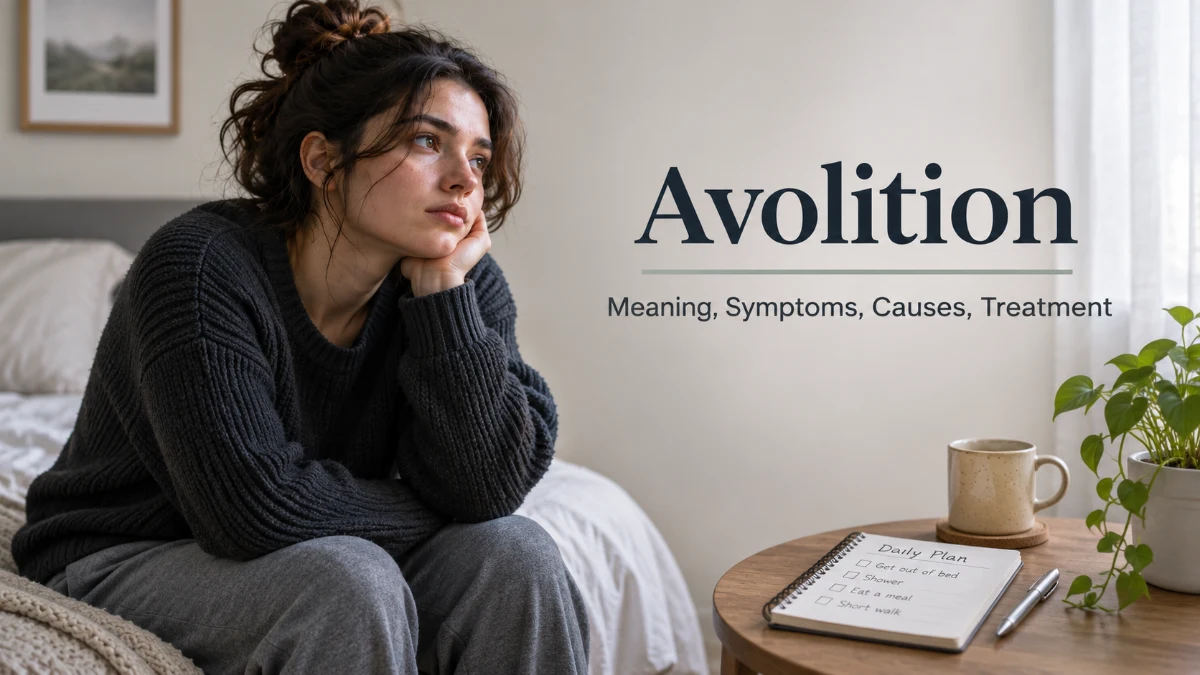
Avolition is a psychological symptom characterized by a reduced ability to initiate and sustain goal-directed activities. It involves diminished motivation and difficulty turning intentions into actions, even when everyday responsibilities need attention. Someone experiencing avolition may struggle to get out of bed, shower, prepare meals, or complete household tasks. Avolition is commonly associated with schizophrenia, but experiencing these difficulties does not automatically mean someone has the disorder.
Unlike ordinary procrastination, avolition can affect even basic activities that a person would normally perform without much thought. Someone may recognize that their room needs cleaning or that they should respond to an important message, yet repeatedly struggle to begin.
Avolition is not a character flaw or simply a matter of insufficient willpower. Understanding its symptoms, possible causes, and treatment options can help people recognize when difficulties with motivation deserve professional attention.
What Are the Symptoms of Avolition?
The most noticeable symptom of avolition is difficulty starting and maintaining purposeful activities. The severity varies, and it can affect personal care, responsibilities, and social interactions.
Common avolition symptoms include:
- Difficulty getting out of bed: Remaining inactive for extended periods despite having activities or responsibilities to attend to.
- Neglecting personal hygiene: Struggling to initiate routine activities such as showering, brushing teeth, or changing clothes.
- Avoiding household tasks: Leaving dishes, laundry, cleaning, or meal preparation unfinished.
- Difficulty completing responsibilities: Struggling to begin assignments, meet deadlines, or follow through with planned activities.
- Reduced social initiative: Rarely initiating conversations, responding to messages, or arranging social activities.
- Limited participation in daily activities: Spending substantial time doing very little, even when opportunities for meaningful activity are available.
According to the National Institute of Mental Health, negative symptoms of schizophrenia can include difficulty planning and maintaining routine activities, reduced motivation, and withdrawal from social interaction.
These behaviors alone do not establish avolition. Occasional inactivity, exhaustion, or difficulty completing chores is common and may have many explanations.
What Causes Avolition?
Avolition does not have one established cause. It is best understood as a clinical symptom that can arise alongside disturbances in motivation, mental health, and everyday functioning.
Avolition and Schizophrenia
Avolition is particularly important in schizophrenia, where it is recognized as a negative symptom. Negative symptoms involve reductions in normal emotional expression, motivation, or behavior.
Other negative symptoms include reduced emotional expression, limited speech, diminished pleasure, and decreased interest in social interaction.
Avolition differs from hallucinations and delusions, which are classified as positive symptoms of schizophrenia.
Clinical assessment also distinguishes between primary negative symptoms, which are more directly associated with the disorder, and secondary symptoms that may result from other contributing factors.
The European Psychiatric Association’s guidance on negative symptoms emphasizes the importance of identifying these contributing factors during assessment.
Other Conditions and Contributing Factors
Difficulties resembling avolition may also occur in people experiencing:
- Depression: Reduced motivation, low energy, and loss of interest can interfere with everyday functioning.
- Medication-related effects: Sedation or other adverse effects may make activities harder to initiate.
- Other psychiatric conditions: Changes in motivation and goal-directed behavior can occur outside schizophrenia.
- Neurological conditions: Some disorders affecting brain function can produce reduced initiative or apathy.
These experiences can look similar without sharing the same underlying cause. A professional assessment is important because different explanations may require different treatment approaches.
Avolition vs. Apathy, Anhedonia, and Laziness
Avolition is often confused with apathy, anhedonia, and procrastination. Although these experiences can overlap, they describe different aspects of motivation, pleasure, and behavior.
| Term | Main characteristic | Everyday example |
| Avolition | Reduced initiation and persistence of goal-directed behavior | Consistently struggling to begin basic household tasks |
| Apathy | Reduced motivation, interest, or emotional engagement | Showing little initiative across daily activities |
| Anhedonia | Reduced capacity to experience or anticipate pleasure | Finding previously enjoyable activities less rewarding |
| Depression-related fatigue | Persistent tiredness or low energy associated with depression | Feeling too exhausted to complete routine activities |
| Procrastination | Delaying tasks, often despite intending to complete them | Putting off an unpleasant assignment until the deadline |
Is Avolition the Same as Apathy?
Not exactly, although the terms overlap.
Apathy is a broader concept involving reduced motivation, interest, or emotional engagement. Avolition specifically emphasizes reduced initiation and persistence of goal-directed activities.
For example, someone experiencing apathy may show little interest in participating in an activity. Someone experiencing avolition may have a goal in mind but struggle to begin or sustain the actions needed to achieve it. However, people with avolition may also experience diminished interest or motivation.
Is Avolition Just Laziness?
No. Laziness is an informal judgment about someone’s behavior, not a clinical diagnosis.
Avolition describes a potentially significant disturbance in motivated behavior. It may interfere with necessary activities even when the consequences of inactivity are apparent.
Ordinary procrastination often involves postponing particular tasks. Avolition may affect a much broader range of activities, including basic self-care.
The distinction depends on the overall pattern, severity, and clinical context rather than any single behavior.
How Does Avolition Affect Daily Life?
Avolition can make ordinary routines increasingly difficult to maintain.
Personal care and household responsibilities may become challenging when activities such as bathing, cooking, or cleaning require sustained initiative. Over time, unfinished tasks can accumulate and make independent living more difficult.
Work and education may also be affected. A person might understand an assignment, possess the necessary skills, and recognize its importance but struggle to start or finish it.
Relationships can become strained when someone rarely initiates conversations, responds to invitations, or follows through with shared plans. Friends and family members may interpret this behavior as disinterest, even when it reflects difficulties with motivation.
These effects can vary considerably. Some people experience occasional difficulties with specific activities, while others require substantial support with everyday functioning.
How Is Avolition Diagnosed and Treated?
Avolition is a symptom rather than a standalone mental health diagnosis. Healthcare professionals assess it by examining patterns of motivation, behavior, and daily functioning.
A clinician may ask about personal hygiene, household responsibilities, social participation, changes in activity levels, and how long the difficulties have been present.
Assessment also considers depression, medication effects, psychotic symptoms, cognitive difficulties, and other possible explanations.
Treatment Approaches
Treatment depends on the underlying condition and the factors contributing to reduced motivation.
Psychological and psychosocial interventions: Cognitive behavioral therapy (CBT), psychoeducation, and family interventions may be part of treatment for people with schizophrenia or other psychotic disorders. The World Health Organization’s recommendations support these approaches as components of care, although their benefits for avolition specifically can vary.
Medication: When schizophrenia is present, antipsychotic medication may help manage psychotic symptoms. However, improvements in avolition are not guaranteed, and persistent primary negative symptoms can be difficult to treat. Medication decisions should be individualized by a qualified clinician.
Treatment of contributing conditions: Addressing depression, medication side effects, or other identified factors may improve difficulties with motivation and activity.
Practical Ways to Manage Everyday Tasks
Small adjustments may make daily responsibilities more manageable alongside appropriate professional care.
- Break larger activities into simple, achievable steps.
- Establish predictable routines for meals, hygiene, and sleep.
- Use reminders or written checklists to reduce the effort of organizing tasks.
- Begin with one manageable activity rather than several competing responsibilities.
- Ask trusted people for practical, nonjudgmental support when needed.
These strategies may reduce everyday barriers, but they should not be considered a substitute for clinical treatment when functioning is significantly impaired.
Read also: Ultimate Medical Academy: Programs, Accreditation, Tuition, and Student Guide.
When Should You Seek Professional Help?
Consider speaking with a mental health professional if difficulty initiating activities persists, becomes more pronounced, or begins interfering with everyday responsibilities.
Professional assessment is especially important when someone regularly struggles with personal hygiene, eating, attending work or school, or maintaining relationships.
A primary care clinician can help evaluate possible medical and psychological causes and arrange a referral to a mental health specialist when appropriate.
If someone becomes unable to meet essential needs or develops symptoms such as hallucinations or delusions, prompt medical evaluation is important. Immediate safety concerns require emergency assistance.
Avolition is more than occasional low motivation. Recognizing persistent changes in goal-directed behavior and seeking an appropriate assessment can help identify contributing conditions and guide practical, individualized support.


